

Understanding Different Types of Jack Stands
Your vehicle’s safety depends on proper support equipment – understanding jack stands could save your life
Investing in quality jack stands isn’t just about convenience – it’s about protecting yourself from potentially fatal accidents while working under your vehicle. The NHTSA reports hundreds of injuries annually due to improper vehicle support, underscoring the need for robust stands. Whether you’re changing oil, rotating tires, or performing major repairs, proper jack stands are your essential safety barrier against thousands of pounds of crushing weight.
Vehicle maintenance requires lifting your car safely off the ground, and while floor jacks excel at raising vehicles, they should never be trusted alone to support weight during extended work periods. Harbor Freight recalled 1.7 million jack stands in 2020 due to reported instances of stands slipping while under load, highlighting why understanding jack stand types, safety features, and proper usage protocols is critical for every DIY mechanic and automotive professional.
Jack stands provide the stable, mechanical support that hydraulic jacks simply cannot match. Unlike jacks that rely on fluid pressure and moving parts, quality jack stands create a solid mechanical connection between your vehicle and the ground, offering redundant safety systems that protect against catastrophic failure. The difference between a $30 jack stand and a $100 model often lies in construction quality, safety features, and load ratings that could determine whether you walk away from an accident or become another statistic.
Modern jack stands fall into two primary categories: adjustable height and fixed height models, each serving specific automotive needs with distinct safety advantages.
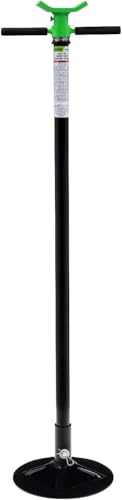
Adjustable Height Jack Stands dominate the market due to their versatility across multiple vehicle types. These stands feature height adjustment mechanisms that accommodate everything from low-profile sports cars to lifted trucks. The three main subcategories include:

07/11/2025 4:13 am
Ratchet-Type Jack Stands utilize self-locking ratchet center columns that automatically engage as you raise the support height. Because of the self-lock mechanism, these jack stands are the easiest to use, just place it under the safe jack point, pull on the center column till the saddle touches the jack point and the ratchets will lock in by themselves. Modern ratcheting stands often include secondary safety pins for redundant protection, addressing concerns about ratchet mechanism failure.


07/11/2025 4:13 am
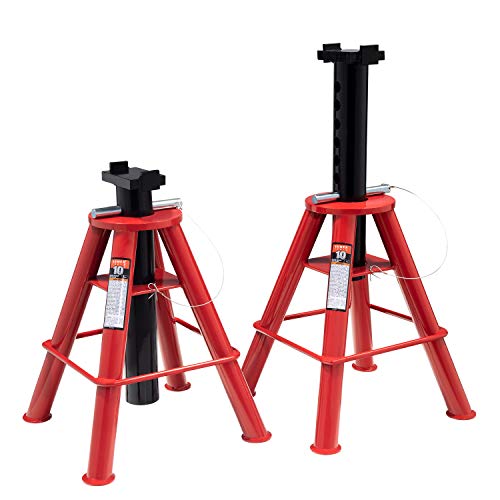
Pin-Type Jack Stands employ a tethered pin system passing through holes in the center column to lock height positions. These stands offer superior safety through their simple, mechanical locking mechanism that’s virtually impossible to fail under load. The pin design provides visual confirmation of engagement and requires deliberate action to release.
07/11/2025 4:13 am
Rotation/Threaded Jack Stands feature cylindrical center columns with threading that raises or lowers through rotation. While less common, these stands provide infinite height adjustment within their range and excellent stability once positioned.


07/11/2025 4:13 am
Fixed Height Jack Stands sacrifice adjustability for maximum reliability and strength. Since they have no moving parts, it is rare to have them fail on you. These stands excel in dedicated workshop environments where specific vehicle heights are consistently required.


07/11/2025 4:13 am
Material composition significantly impacts jack stand performance and longevity. Steel construction provides maximum strength and durability for heavy-duty applications, while aluminum models offer portability advantages for mobile mechanics and track day enthusiasts. Aluminum jack stands are not as prevalent as their steel counterpart, but they can have their advantages. Besides their general good looks, they are lighter for easier transportation and storage, and there is no worry of rusting like metal jack stands can.
The base design affects stability substantially. Wide pyramid bases distribute weight across larger surface areas, reducing ground pressure and improving stability on various surfaces. Some manufacturers include flat rubber pads to protect garage floors and prevent slipping on smooth surfaces.
Critical Safety Protocols for Jack Stand Usage
Understanding ASME safety standards is fundamental to jack stand selection and usage. The ASME PASE-2014 (Safety Standard for Portable Automotive Service Equipment) states that jack stands must be rated as a pair and not rated per stand. This means a pair rated for 6,000 pounds can support 3,000 pounds per individual stand, not 6,000 pounds each.
Safety testing requirements mandate that each jack stand must be able to pass a proof load test of 200% of rated capacity for a minimum of ten minutes, with no more than 0.125″ reduction in the overall height of the jack stand. This testing ensures stands maintain structural integrity under extreme loads.
Proper jack stand placement begins with vehicle preparation. Always work on level, solid surfaces like concrete or asphalt. Engage parking brakes and place wheel chocks on wheels remaining on the ground. When you are ready to lift the car, place the transmission in “gear” or in “park”.
Vehicle manufacturer lift points are specifically engineered to handle lifting loads safely. Never place jack stands under random vehicle components – always consult your owner’s manual for designated support points. These points typically include reinforced frame rails, suspension mounting points, and specific unibody reinforcements designed for lifting operations.
The critical safety step involves weight transfer from jack to stands. When releasing hydraulic pressure from the floor jack, a properly rated jack stand will hold the weight of the vehicle as long as the stand is flat. Problems occur if the jack is tilted, or the vehicle weight doesn’t come down flush on top of the stand.
Testing stability before beginning work is non-negotiable. To test, push against the car from both sides, front and back. If it moves or shakes, jack up that corner and readjust the jack stands, repeat this until you are satisfied that the car is stable. This simple test can prevent catastrophic failure during repair work.
Additional safety measures include keeping a floor jack in position as backup support and placing spare tires or wooden blocks near jack stands as emergency catch systems. Learn more about proper vehicle lifting techniques to ensure complete safety protocols.
Top-Rated Jack Stand Models for 2025
Based on extensive testing, professional reviews, and user feedback, these jack stands represent the best combinations of safety, build quality, and value across different weight categories and applications.
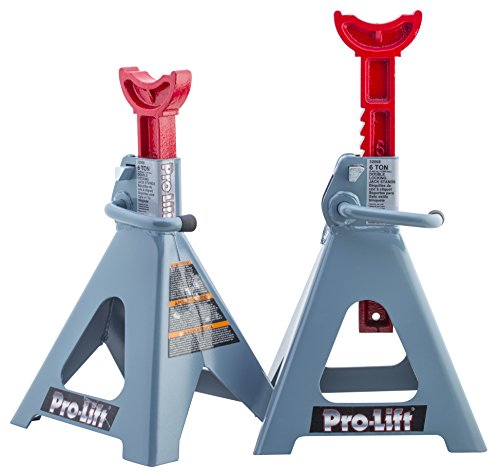
Pro-LifT T-6906D Heavy Duty 6 Ton Jack Stands
Why This Stands Out: These professional-grade jack stands feature dual safety mechanisms that provide exceptional security for heavy-duty applications.
Pro-Lift 6 Ton Jack Stands come in pair that features a wide foot base and is constructed with sturdy stamped Steel with a welded frame design to provide strength and stable support. The standout feature is the double-locking system combining ratchet mechanisms with mobility pins for redundant safety protection.
07/11/2025 4:13 am
Key Features:
- 6-ton (12,000 lb) capacity per pair
- Height range: 16″ to 23.5″
- Wide pyramid base (10.5″ x 9″) for maximum stability
- High-quality cast ductile iron ratchet bar
- Double locking mechanism with handle and mobility pin
- ASME PASE-2014 safety standard compliance
The large saddle surface area provides excellent contact with vehicle lifting points, while the sawtooth ratchet design allows precise height adjustments. With the double-locking pins mechanism, it features both handle lock and mobility pin for extra safety. User reviews consistently praise the robust construction and peace of mind provided by the dual safety systems. However, note that the minimum height may be too tall for some low-profile vehicles.
VEVOR 6 Ton Double Locking Jack Stands
Why This Stands Out: VEVOR has established itself as a value leader combining professional features with competitive pricing, earning 4.7 out of 5 stars across nearly 200 reviews.
VEVOR’s jack stands have a 6 ton/13000 lbs loading capacity and can raise SUVs, pickups, cars, UTVs, and ATVs. They conform to CE standards, ensuring your safety during use. The enhanced design features a load-bearing area four times larger than standard models through the wide pyramid base and triangular foot pads.

07/11/2025 4:13 am
Key Features:
- 6-ton (13,000 lb) capacity per pair
- Height range: 14.2″ to 23″ with 9 adjustment levels
- Double safety mechanism with ratchet bar and metal safety pins
- Carbon steel base with cast iron ratchet bar
- Rust-proof coating for longevity
- Wide pyramid base with triangular foot pads
The notched saddle top of the ratchet bar perfectly fits the edges of the vehicle, providing a stable and secure grip. Customer feedback highlights the exceptional build quality, with users noting successful use on vehicles ranging from F-150s to large SUVs. The height capability makes these ideal for lifted trucks and commercial vehicles.
YATOINTO 3 Ton Double Pin Locking Jack Stands
Why This Stands Out: These stands offer premium safety features typically found in more expensive models while maintaining competitive pricing for budget-conscious users.

07/11/2025 4:13 am
Key Features:
- 3-ton (6,600 lb) capacity per pair
- Height range: 11.22″ to 16.54″ with 10 adjustment levels
- Double pin locking system for reinforced safety
- Includes extra rubber pads for paint protection
- Rigid steel construction with pyramid base
- US safety standards compliance
The removable locking support pin provides additional security, increasing safety by 200%! The multi-position ratchet bar uses high-quality cast ductile iron construction for durability and strength. User reviews consistently mention the sturdy construction and effective safety features, with customers appreciating the included rubber pads that protect vehicle surfaces during lifting operations.
Torin Big Red T43004 Aluminum Jack Stands
Why This Stands Out: These lightweight aluminum stands excel in portable applications while maintaining professional safety standards.
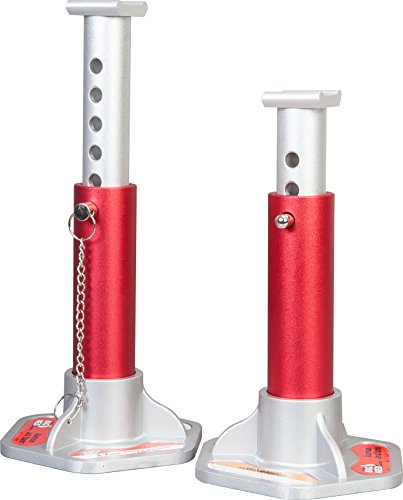
Weighing just over 5 pounds each, they are easy to transport or stow away. And with a very attractive red anodized finish on the support columns, they would look good in any garage. The pin-through design provides superior safety compared to ratcheting mechanisms, making these ideal for track day and mobile mechanic applications.
07/11/2025 4:13 am
Key Features:
- 3-ton (6,000 lb) capacity per pair
- Height range: 10.75″ to 15.5″ with 6 locking positions
- Lightweight aluminum construction (5 lbs each)
- Pin-through safety design
- ASME safety standards compliance
- Rust-free construction
The column and support post of the stand use aluminum tubing while the support base is cast aluminum. These stands offer excellent value for users prioritizing portability without sacrificing safety. The lower height range makes them perfect for sports cars and sedans, while the aluminum construction eliminates rust concerns for long-term storage.
Understanding safe jack stand removal procedures is equally important to prevent accidents during the lowering process.
Professional Installation and Safety Best Practices
Proper jack stand installation requires systematic approach and attention to critical safety details that separate professional mechanics from dangerous amateurs.
Surface preparation forms the foundation of safe lifting operations. Concrete and asphalt provide ideal surfaces, while gravel, dirt, or uneven ground creates dangerous instability. For softer surfaces, use thick plywood sheets to distribute weight and prevent sinking. Never place a jack stand under the floorboards or moving parts.
Wheel chocking prevents catastrophic rolling accidents that can occur even with parking brakes engaged. Place chocks on both sides of wheels remaining on the ground, positioned on the opposite end from lifting operations. For front-end lifting, chock rear wheels; for rear-end work, secure front wheels.
Vehicle lifting sequence affects stability and safety. When lifting entire vehicles, work systematically: front first, then rear. Use designated manufacturer lifting points exclusively – these reinforced areas are engineered specifically for vehicle weight. Using the information from the car’s user’s manual, identify the safe lift points (small divots in the chassis near the wheels) to place the jack stands.
Height adjustment and locking verification prevents failure under load. Set jack stands to equal heights when working in pairs, ensuring level vehicle positioning. For ratcheting stands, verify that pawls fully engage with ratchet teeth. For pin-type stands, ensure pins pass completely through holes and engage safety clips or tethers.
Weight transfer must occur gradually and deliberately. After positioning jack stands under designated points, slowly lower the floor jack while monitoring stand stability. The vehicle should settle evenly onto stands without shifting or tilting. Any movement indicates improper positioning requiring immediate correction.
Final stability testing validates safe working conditions. To test, push against the car from both sides, front and back. If it moves or shakes, jack up that corner and readjust the jack stands, repeat this until you are satisfied that the car is stable. Only begin work after confirming complete stability through physical testing.
Emergency preparedness includes positioning spare tires or wooden blocks near work areas as backup supports. Keep floor jacks nearby for emergency lifting capability. Learn more about what to do if vehicles fall off jack stands to prepare for worst-case scenarios.
For lifted vehicles requiring extra height clearance, specialized tall jack stands provide the necessary support range while maintaining stability and safety standards.