

Essential Jack Stand Safety and Setup
Investing in quality jack stands could save your life—proper setup creates a stable platform that prevents potentially fatal accidents while working under your car.
WARNING: Never combine two jack stands with a trolley jack at the rear simultaneously. This dangerous combination significantly increases the risk of vehicle instability. Always use either front or rear jack stands, or opt for a four-point jack stand system for maximum safety.
Working under a vehicle requires proper safety equipment that can mean the difference between completing your maintenance task and facing a life-threatening situation. According to the National Highway Traffic Safety Administration, approximately 10,000 people a year are injured using a jack or other vehicle-lifting equipment, and 74,000 are injured by a falling vehicle or vehicle part.
When performing localized repairs on your vehicle’s front, rear, or sides, two properly positioned jack stands provide the essential safety backup your hydraulic jack cannot offer alone. This systematic approach ensures your safety while accessing critical areas like brake components, suspension systems, or undercarriage maintenance points.
Required Equipment for Safe Jack Stand Operation
Quality preparation prevents accidents. Gather these essential items before beginning:
- Heavy-duty floor jack rated for your vehicle’s weight
- Matched pair of jack stands with appropriate load capacity
- Minimum of two wheel chocks (rubber or wooden blocks)
- Optional backup tires with rims or 4×4 wooden boards for additional safety
Weight capacity calculation is crucial for safety. Jack stands manufactured after 2015 are rated by the American National Standards Institute and the American Society of Mechanical Engineers. The rating states that a pair of two-ton jacks are capable of safely supporting up to 4000 pounds when used together.
Understanding Your Vehicle’s Requirements
Always consult your owner’s manual first. This critical document provides your car’s curb weight, which determines the minimum load capacity required for your jack stands. The manual also identifies designated safe jack points and manufacturer-recommended safety procedures specific to your vehicle model.
Professional mechanics emphasize the importance of using jack stands with capacity exceeding your vehicle’s weight. That floor jack needs to be rated to hold at least 75 percent of the weight of your vehicle for it to be considered safe. This safety margin accounts for weight distribution variations and unexpected load shifts.
Step-by-Step Jack Stand Setup Process
Front or Rear Vehicle Lifting
Position your vehicle on level, solid ground—preferably concrete or asphalt. Avoid working on grass, gravel, or any surface that could shift under the vehicle’s weight. Even slight slopes can cause dangerous vehicle movement during the lifting process.
Secure your vehicle before lifting. Engage the parking brake fully, place automatic transmissions in park, and leave manual transmissions in first gear. Position wheel chocks on the opposite end from where you’re lifting—if raising the front, chock the rear wheels and vice versa.
Front-end lifting requires special attention to weight distribution. The front cradle or engine support cross member typically serves as the primary lifting point. Remember that front-engine vehicles carry more weight forward, requiring higher-capacity equipment and extra caution during the lifting process.
Lift slowly while monitoring wheel movement. Place your floor jack beneath the designated jack point and raise the vehicle gradually, watching the rear wheels for any signs of rolling. Don’t use jack stands on asphalt on a hot summer day without putting a piece of plywood larger than the base of the stand underneath the jack stand. A sinking jack stand can cause the vehicle to shift and fall unexpectedly.
Install jack stands at designated support points. Once you reach the desired height, position your jack stands under the specified jack points—typically on the front axle or behind the front wheels. Lower the vehicle slowly onto the stands, ensuring full weight transfer before removing the floor jack.
Side Vehicle Lifting Technique
Side lifting requires a two-step process. Unlike front or rear lifting, working on vehicle sides may require lifting twice to achieve proper positioning.
Start with proper jack point identification. Locate the designated jack points for your specific lifting requirements, leaving adequate room for jack stand placement. Some modern all-in-one jack stands eliminate this spacing concern.
Execute the lifting sequence systematically. Place the floor jack under the first safe jack point, allowing room for the jack stand. Raise the vehicle slowly while monitoring ground-contact wheels for movement. Install the first jack stand and lower the vehicle onto it before moving to the second position.
Complete the process methodically. Move to the opposite position (rear if you started front) and repeat the lifting sequence. This systematic approach maintains vehicle stability throughout the process.
Critical Safety Testing and Verification
Jack Stand Stability Assessment
Never work under an untested setup. Before placing any part of your body under the vehicle, perform comprehensive stability testing. Shake each jack stand lightly by hand to verify firm locking mechanisms. Any movement or looseness requires immediate readjustment.
Perform the vehicle shake test. To ensure that your car is finally secure, shake it gently. All jack stands should be planted flat on the ground, and there shouldn’t be any movement. Push against the vehicle from multiple angles—front, back, and sides—to verify stability.
Address any instability immediately. If wobbling occurs during testing, use your floor jack to lift the vehicle off the jack stands and readjust them completely. Never compromise on stability—your safety depends on this verification step.
Additional Safety Measures
Implement backup safety systems. Position spare tires with rims or wooden blocks (4×4 inches minimum) near the jack stands closest to your work area. These serve as emergency catch systems if primary support fails.
Maintain the floor jack as backup support. In addition to adding a set of jack stands to your tool kit, Bevacqua states that it is always best practice to leave your floor jack in place under the vehicle while working. Position it to lightly contact the vehicle without supporting weight.
Working under a lifted vehicle carries inherent risks that proper preparation significantly reduces. Understanding these safety procedures and implementing them consistently protects you from potentially fatal accidents while enabling confident completion of necessary maintenance tasks.
Top-Rated Jack Stand Recommendations
Amazon Basics Steel Jack Auto Stands
Exceptional value with professional-grade safety features. These 3-ton capacity jack stands feature self-locking ratchet mechanisms that eliminate the need for separate locking keys. Meeting ASME PASE-2014 Safety Standards, they provide adjustable height settings and robust construction suitable for most passenger vehicles. The 6,000-pound total capacity ensures adequate safety margin for vehicles up to 4,500 pounds.

24/07/2026 9:09 am
Key advantages include proven reliability, straightforward operation, and competitive pricing. The ratcheting system allows precise height adjustment while the steel construction provides long-term durability. These stands represent an excellent entry point for DIY mechanics seeking dependable safety equipment.
BIG RED T43202 Torin Heavy Duty Steel Jack Stands
Professional-grade construction with wide pyramid base design. These 3-ton jack stands feature high-grade forged steel construction with welded frame design for maximum durability. The wide pyramid foot base provides exceptional stability and weight distribution, making them ideal for most passenger cars while explicitly not recommended for large SUVs or trucks due to height limitations.

23/07/2026 11:06 pm
Lightweight design facilitates easy transport and storage while maintaining the strength necessary for safe vehicle support. The proven track record and extensive positive reviews make these stands a trusted choice among automotive enthusiasts and professional mechanics.
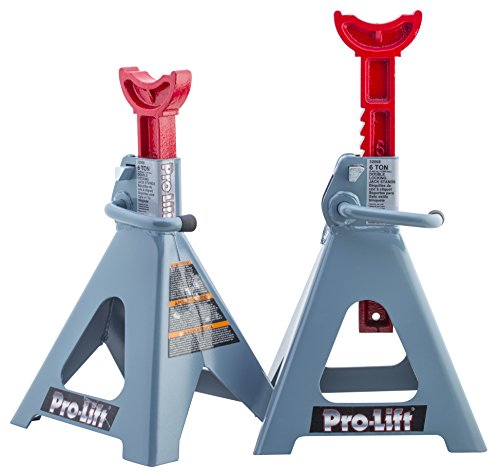
Pro-Lift Heavy Duty 6 Ton Jack Stands
Heavy-duty performance with double locking safety system. These professional-grade jack stands feature both handle locks and mobility pins for redundant safety protection. The 6-ton capacity handles larger vehicles including SUVs and light trucks, with a lifting range from 16 to 23.5 inches accommodating various vehicle heights.
24/07/2026 9:09 am
High-quality cast ductile iron ratchet bar ensures smooth operation and long-term reliability. The double-locking mechanism provides peace of mind for extended maintenance sessions, while the substantial weight capacity offers significant safety margins for most applications.
VEVOR Jack Stands 6 Ton Capacity
Advanced engineering with extra-wide height range. These premium jack stands offer 13,000-pound total capacity with adjustable height from 14.2 to 23 inches, accommodating everything from sports cars to pickup trucks. The double-locking system combines ratcheting action with safety pins for maximum security during use.

24/07/2026 9:09 am
Red powder-coated finish resists corrosion while wide base design ensures exceptional stability. The extended height range makes these stands particularly valuable for lifted vehicles or applications requiring maximum clearance. Professional-grade construction justifies the investment for serious automotive work.
GAOLLY Car Jack Stands with Double Locking
Innovative safety features with large foot base design. These 2-ton jack stands feature double locking mechanisms and enlarged base plates for enhanced stability. The 4,400-pound capacity suits most passenger cars, while the blue finish provides easy identification in busy workshops.

24/07/2026 9:09 am
Compact design facilitates storage while maintaining professional capabilities. The double-locking system provides redundant safety features, while the reasonable price point makes them accessible for occasional use. Heavy-duty steel construction with welded frame design ensures long-term reliability for regular maintenance tasks.
Related Safety Resources
For comprehensive vehicle lifting safety, explore additional resources on proper jack stand usage and safety protocols. Understanding the complete process of supporting your entire vehicle provides valuable context for two-point lifting procedures.
Vehicle accidents can occur even with proper equipment if safety procedures aren’t followed correctly. Learn about emergency procedures when vehicles fall off jack stands to understand preventive measures and appropriate responses to dangerous situations.
Different vehicle types require specific approaches to safe lifting. Explore various jack stand types and their proper applications to select the optimal equipment for your specific vehicle and maintenance requirements.
Essential Safety Reminders
Professional mechanics consistently emphasize that no repair task justifies risking personal safety. Proper jack stand setup requires patience, attention to detail, and unwavering commitment to safety protocols. Following these procedures creates a foundation for confident, safe vehicle maintenance that protects both you and your investment.
Quality jack stands represent a critical investment in workshop safety. When selected and used properly, they provide years of reliable service while protecting you from potentially catastrophic accidents. Never compromise on safety equipment quality—your life depends on these tools performing flawlessly under extreme loads.