
Don’t Risk Your Life – Get the Right Jack Stands for Your Truck 🔧
Your truck weighs thousands of pounds, and cheap jack stands can fail catastrophically. Whether you drive a lightweight pickup or a heavy-duty commercial truck, choosing the wrong jack stands isn’t just expensive – it’s potentially deadly.
Working on trucks requires specialized equipment that can handle significantly more weight than standard car maintenance. Unlike passenger vehicles that typically weigh 2-3 tons, trucks range from 3.5 tons for compact pickups to over 17 tons for heavy-duty commercial vehicles. This massive weight difference means your standard 2-3 ton jack stands simply won’t cut it – you need heavy-duty stands engineered for truck applications. Just as important as having the right jack stands is pairing them with a quality floor jack capable of lifting your truck to the proper height safely.
Understanding Truck Weight Categories 📊
Before selecting jack stands, you must know your truck’s weight class:
Light-Duty Trucks (3-4.5 tons):
- Ford Ranger
- Toyota Tacoma
- Chevrolet Colorado
- Nissan Frontier
Medium-Duty Trucks (5-12 tons):
- Ford F-650
- Chevrolet Silverado 6500
- Ram 5500
- Commercial delivery trucks
Heavy-Duty Trucks (13-17+ tons):
- Ford F-750
- Tow trucks
- Large commercial vehicles
- Construction equipment
Why Standard Jack Stands Won’t Work for Trucks ⚠️
Most automotive jack stands are rated for 2-3 tons, which might seem adequate for a “light” truck. However, this creates several critical safety issues:
Weight Distribution: When lifting one end of a truck, each jack stand supports roughly half the vehicle’s weight plus any cargo or equipment.
Safety Margin: Professional mechanics recommend jack stands rated at least 50% higher than the actual load for safety redundancy.
Dynamic Loading: Vibrations and movement while working can create additional stress on the stands.
Essential Features for Truck Jack Stands 🔍
Construction Material
Steel Construction is non-negotiable for truck applications. Steel provides the strength needed for heavy loads, though it adds weight. Aluminum stands, while lighter, are typically limited to lighter applications and aren’t suitable for most trucks.
Base Design
A wide, stable base is crucial for truck applications. Look for bases measuring at least 10×10 inches – wider bases distribute weight better and resist sinking into garage floors or soft ground.
Height Range
Trucks, especially lifted models, require taller jack stands. Standard automotive stands max out around 20 inches, while truck-specific stands can extend to 46+ inches for lifted vehicles. If you’re working with particularly high trucks or need maximum clearance, specialized tall jack stands offer extended height ranges that regular stands simply can’t match.
Locking Mechanisms
Double-locking systems or pin-type locks provide the security needed for heavy loads. Ratchet-style mechanisms with backup locks are ideal for most truck applications.
Top Jack Stand Recommendations for Trucks
Sunex 1410 10-Ton High Height Pin Type Jack Stands
The Sunex 1410 stands are built to support up to 20,000 lbs per pair and extend from 28.1 inches to 46.5 inches with 10 locking positions, making them ideal for medium-duty trucks and lifted vehicles. These professional-grade stands feature a large V-shaped saddle with locating lugs that securely cradle axles and frame components.

19/06/2026 9:54 pm
✅ Pros:
- Exceptional height range for lifted trucks
- Pin-type locking system with tethered pin
- Heavy-duty steel construction with four-leg base
- Multiple locking positions for precise height adjustment
❌ Cons:
- Heavy weight (69 lbs per pair) makes portability challenging
- Higher price point compared to basic stands
- Overkill for light-duty truck applications
Key Features:
- Weight Capacity: 10 tons per pair (5 tons each)
- Height Range: 28.1″ to 46.5″
- Base Design: Four-leg steel construction
- Saddle: Large V-shaped design with locating lugs
- Locking: Pin-type with 10 positions
Best For: Medium-duty trucks, lifted vehicles, commercial applications, and professional shops requiring maximum versatility.
Known Limitations: The substantial weight makes these challenging for frequent repositioning, and the high capacity may be unnecessary for lighter pickup trucks.
Omega 32225B 22-Ton Heavy Duty Jack Stands
For the heaviest applications, the Omega 32225B Heavy Duty 22-Ton jack stands offer exceptional strength with welded heavy gauge all-steel construction. These stands are engineered for commercial trucks, tow trucks, and heavy equipment applications where maximum capacity is essential.

19/06/2026 9:54 pm
✅ Pros:
- Massive 22-ton capacity handles any truck
- Welded steel construction prevents distortion under load
- Pin lock system with attached pin prevents loss
- Wide 9¾” x 9¾” base for maximum stability
❌ Cons:
- Limited height range (13″-19″) not suitable for lifted trucks
- Extremely heavy construction
- Higher cost than lower-capacity alternatives
Key Features:
- Weight Capacity: 22 tons per pair
- Height Range: 13″ to 19″
- Construction: Heavy gauge welded steel frame
- Base: 9¾” x 9¾” steel platform
- Saddle: Large 3″ x 3″ contact area
Best For: Heavy-duty commercial trucks, tow trucks, construction equipment, and applications requiring maximum load capacity.
Known Limitations: The limited height range makes these unsuitable for lifted trucks, and the extreme weight rating comes with correspondingly heavy construction.
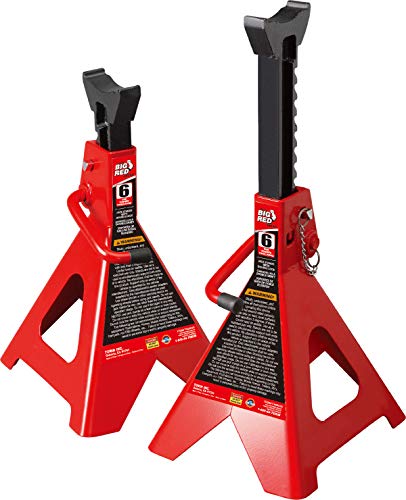
Torin T46002A 6-Ton Jack Stands with Double Lock Protection
An excellent entry-level option for light-duty trucks, the Torin T46002A provides reliable performance at an affordable price point. These stands feature a double-locking mechanism that provides 200% safety redundancy compared to single-lock designs.
19/06/2026 9:55 pm
✅ Pros:
- ASME safety standards compliance
- Double lock protection system
- Affordable pricing for quality construction
- Forged iron ratchet bar for durability
❌ Cons:
- Limited to light-duty truck applications
- Maximum 23.4″ height restricts lifted vehicle compatibility
- Smaller base compared to heavy-duty options
Key Features:
- Weight Capacity: 6 tons per pair (3 tons each)
- Height Range: Minimum to 23.4″
- Locking: Double lock ratchet system
- Base: 10-13/16″ x 9-7/16″ footprint
- Construction: Forged iron ratchet bar
Best For: Light-duty pickup trucks, weekend mechanics, and budget-conscious applications where maximum height isn’t required.
Known Limitations: The 6-ton capacity limits use to lighter trucks, and the height restriction prevents use with significantly lifted vehicles.
Critical Safety Factors When Choosing Jack Stands ⚡
Weight Capacity Calculations
Never select jack stands with capacity exactly matching your truck’s weight. Calculate your truck’s curb weight (empty vehicle) plus any typical cargo, then add a 50% safety margin. For a 6,000-lb truck, select stands rated for at least 9,000 lbs total capacity.
Understanding Rating Systems
Pay attention to whether capacity ratings refer to individual stands or pairs. Most manufacturers quote pair ratings, but some specify per-stand capacity. Always verify before purchasing to avoid dangerous underrating.
Ground Conditions
Level, solid ground is essential for safe jack stand use. Never use stands on slopes, soft soil, or uneven surfaces. If working outdoors, use solid pads under the stands to prevent sinking.
Proper Placement Points
Trucks have specific jack points designed to handle lifting loads. These are typically reinforced frame sections near the wheels. Never place stands on body panels, suspension components, or non-structural areas.
Professional Installation Tips 🔧
Pre-Lift Inspection: Check the truck’s owner manual for designated jack points and weight specifications. Inspect stands for damage, proper operation, and secure locking mechanisms.
Lifting Sequence: Use a floor jack to lift the truck, then position jack stands under designated points. Lower the truck slowly onto the stands, ensuring full contact before removing the jack.
Stability Test: Once positioned, gently shake the truck to verify stability. Any movement indicates improper placement or insufficient capacity.
Working Safety: Never rely solely on jack stands for extended periods. Use wheel chocks on remaining wheels and consider backup safety measures for critical work. For routine maintenance like oil changes or tire rotations, many professionals recommend using drive-up ramps as an alternative to jack stands when possible. Understanding the different types of jack stands and their proper usage ensures you’re selecting the right tool for each specific maintenance task.
Maintenance and Storage Best Practices 🛠️
Regular maintenance extends jack stand life and ensures safety:
Cleaning: Remove dirt, grease, and debris after each use. Pay special attention to locking mechanisms and adjustment points.
Lubrication: Apply light oil to ratchet mechanisms and pins. Avoid over-lubrication which can attract debris.
Storage: Store in a dry location to prevent rust. Keep stands fully collapsed to save space and reduce stress on components. Proper tool organization extends the life of all your lifting equipment and ensures everything is ready when you need it.
Inspection: Regularly check for cracks, bent components, or worn locking mechanisms. Replace immediately if any damage is found.
Common Mistakes to Avoid ❌
Using Hydraulic Jacks for Support: Never crawl under a vehicle supported only by hydraulic jacks. These can fail without warning – always use proper jack stands.
Mixing Stand Types: Don’t combine different capacity or height stands when supporting one vehicle. This creates uneven loading and potential failure points.
Ignoring Weight Distribution: Remember that lifting one end of a truck concentrates the entire weight on two stands. Calculate accordingly.
Skipping Safety Margins: Don’t select stands with barely adequate capacity. The small cost difference between ratings isn’t worth the safety risk.
Frequently Asked Questions 🤔
Q: Can I use two hydraulic jacks instead of jack stands? A: Never put your body under a vehicle supported only by hydraulic jacks. They can fail catastrophically without warning. Always use proper jack stands or drive-on ramps for safety.
Q: How do I know if my truck is properly supported? A: After positioning jack stands, gently shake the vehicle. It should feel completely stable with no movement or shifting. Any instability indicates improper placement or inadequate capacity.
Q: What are ASME standards for jack stands? A: ASME (American Society of Mechanical Engineers) standards require jack stands to support 200% of half their quoted capacity. This ensures substantial safety margins for real-world use.
Q: Where exactly should I place jack stands under my truck? A: Use only manufacturer-designated jack points, typically reinforced frame sections near the wheels. Never use suspension components, body panels, or non-structural areas. Consult your owner’s manual for specific locations.
Q: How many jack stands do I need for truck maintenance? A: Use one stand for each wheel off the ground. For most maintenance, you’ll need a pair for front or rear work. Never attempt to support an entire truck on just two stands. When working on both ends of the vehicle, proper techniques for using multiple jack stands safely become essential for preventing accidents.
Conclusion: Invest in Safety, Not Savings 💪
Choosing the right jack stands for your truck isn’t about finding the cheapest option – it’s about ensuring your safety while working underneath thousands of pounds of vehicle. For most medium-duty applications, the Sunex 1410 10-Ton stands provide exceptional versatility with their 28.1″ to 46.5″ height range, making them suitable for both standard and lifted trucks.
Remember that your life is worth more than the price difference between adequate and exceptional jack stands. Whether you choose 6-ton stands for a compact pickup or 22-ton stands for commercial applications, prioritize quality construction, proper capacity ratings, and proven safety features.
Never compromise on safety equipment. A quality set of truck jack stands is a one-time investment that protects you for years of maintenance work. Choose stands that exceed your current needs – you’ll appreciate the extra capacity and height when you need them most.