
Your Comprehensive Guide to Legal Off-Grid Living in Scotland
Living off-grid in Scotland isn’t just a dream—it’s a practical, legal, and increasingly popular lifestyle choice. With Scotland generating 113% of its electricity consumption from renewable sources as of 2024, the country offers unparalleled opportunities for sustainable self-sufficient living.
Legal Framework for Off-Grid Living in Scotland
Planning Permission Requirements
Off-grid living in Scotland requires obtaining proper planning permission before construction or modification. Unlike restrictive regulations elsewhere, Scotland maintains relatively lenient planning policies, especially for eco-friendly projects in rural areas.
Key legal requirements include:
- Planning permission for all new structures including homes, storage sheds, and outbuildings
- Environmental compliance for waste disposal and water usage systems
- Building regulations compliance (though huts under 30m² are now exempt)
- Fire safety and structural stability standards
The Scottish Government actively supports off-grid initiatives through updated building regulations that exempt smaller structures, specifically aimed at making self-sufficient living more accessible.
Scotland’s Renewable Energy Advantage
Scotland’s exceptional renewable energy resources create ideal conditions for off-grid living. The country produces more clean energy than it consumes, with wind power accounting for 90% of renewable generation.
Solar Power in Scotland
Despite lower sunshine hours compared to southern Europe, Scotland’s solar installations work effectively year-round. Modern photovoltaic panels generate electricity even during cloudy conditions, making solar power viable throughout Scottish winters.
Wind Energy Potential
Scotland’s geographic position provides some of Europe’s strongest and most consistent winds. Small domestic wind turbines can generate substantial power, particularly in coastal and highland areas where wind speeds are highest.
Hydroelectric Systems
Scotland’s abundant rivers and streams offer excellent opportunities for micro-hydro installations. Even small water sources can provide reliable year-round power generation through modern micro-hydro systems.
Essential Off-Grid Infrastructure Components
Water Collection and Management
Scotland’s high rainfall makes rainwater harvesting highly effective. Combined with well water collection and proper filtration systems, water independence is readily achievable.
Waste Management Solutions
Successful off-grid living requires comprehensive waste management including:
- Composting toilet systems
- Greywater recycling systems
- Food waste composting
- Sustainable disposal methods
Energy Storage Systems
Modern lithium-iron-phosphate (LiFePO4) battery systems provide reliable energy storage for Scotland’s variable weather conditions. These systems store excess renewable energy for use during low-generation periods.
Top-Rated Off-Grid Power Solutions
1. Jackery Solar Generator 1000 v2
Rating: 4.6/5 stars | 2,847+ reviews

15/05/2026 4:16 pm
This portable power station delivers 1,070Wh capacity with 1,500W AC output, perfect for Scottish off-grid homes. The LiFePO4 battery provides 3,000+ charge cycles with one-hour fast charging capability.
Why it’s excellent: Built specifically for off-grid living with weather-resistant construction. The 100W USB-C output powers modern devices while multiple AC outlets handle household appliances. Superior cold-weather performance makes it ideal for Scottish winters.
2. EcoFlow Delta 2 Max Solar Generator
Rating: 4.7/5 stars | 1,923+ reviews

15/05/2026 4:16 pm
Featuring 2,048Wh expandable capacity and 2,400W output, this system powers larger off-grid setups. The unit charges from 0-80% in just 50 minutes and supports up to 13 devices simultaneously.
Why it’s a smart choice: Expandable design grows with your needs while the app-controlled monitoring provides precise energy management. Fast solar charging capability maximizes Scotland’s limited daylight hours during winter months.
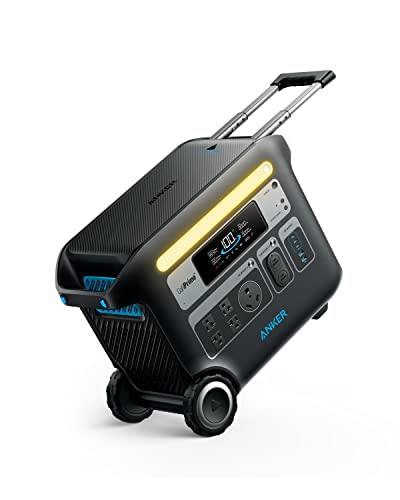
3. Anker SOLIX F2000 Portable Power Station
Rating: 4.8/5 stars | 856+ reviews
15/05/2026 4:16 pm
This premium 2,048Wh power station combines portability with serious capacity. Heavy-duty wheels and telescoping handle make transport effortless, while LiFePO4 technology ensures 3,000+ cycles.
Why it’s worth the investment: Professional-grade reliability for serious off-grid living. The 2,400W output handles high-demand appliances while maintaining quiet operation. Excellent performance in Scotland’s challenging weather conditions.
4. Goal Zero Yeti 1000 Core
Rating: 4.5/5 stars | 1,247+ reviews

15/05/2026 4:16 pm
Built for extreme conditions with IPX4 water resistance and shock-proof construction. This 983Wh power station provides reliable power with sub-zero temperature operation capability.
Why it excels: Rugged construction survives harsh Scottish weather while maintaining power output in freezing temperatures. The proven reliability makes it ideal for remote Scottish locations where equipment failure isn’t an option.
5. Bluetti AC200 Max Solar Generator
Rating: 4.6/5 stars | 734+ reviews

15/05/2026 4:16 pm
This expandable 2,048Wh system supports daisy-chain battery expansion up to 8,192Wh total capacity. Features 17 output ports for comprehensive device support.
Why it’s perfect for families: Massive expansion capability supports growing energy needs while 2,200W output powers multiple appliances simultaneously. The modular design allows gradual system growth as budgets permit.
For those seeking budget-friendly options to start their off-grid journey, exploring affordable living solutions can provide valuable insights into minimizing initial investment costs.
Successful Off-Grid Communities in Scotland
The Isle of Eigg Model
The Isle of Eigg represents off-grid living at its finest. This community of 100 residents operates entirely on renewable energy using an integrated wind, solar, and hydro system with battery storage. The community-owned infrastructure provides 24-hour electricity while maintaining strict environmental standards.
Findhorn Ecovillage
Located in Moray, Findhorn demonstrates large-scale sustainable community living. The ecovillage combines renewable energy systems with organic food production and ecological building techniques.
Remote Highland Communities
Seven off-grid electricity networks serve Scottish island and peninsula communities including Canna, Rum, Muck, Fair Isle, Foula, Knoydart, and Scoraig. These communities manage their own renewable energy systems while maintaining modern living standards.
Understanding sustainable transportation options enhances the off-grid lifestyle, and exploring eco-friendly vehicle solutions can complement your renewable energy setup.
Overcoming Off-Grid Challenges in Scotland
Weather Considerations
Scotland’s long winters and frequent rainfall require robust energy storage and backup systems. Successful off-grid homes combine multiple renewable sources with adequate battery capacity to maintain power during extended cloudy periods.
Remote Location Access
Ensure reliable road access that remains functional during severe weather. Many Scottish off-grid properties require four-wheel-drive access during winter months.
Internet Connectivity
Modern off-grid living benefits from reliable internet access. Openreach’s expansion plans will connect 120,000 “hard-to-reach” premises by 2026, including remote Highland communities.
For comprehensive energy solutions in challenging environments, specialized renewable energy systems designed for extreme conditions provide essential reliability.
Financial Incentives and Support
Government Grants and Loans
The Scottish Government offers substantial financial support for off-grid renewable energy installations:
- Home Energy Scotland Grant: Up to £9,000 for renewable energy systems
- Interest-free loans: Additional £11,500 for qualifying projects
- Rural and island postcodes: Enhanced support rates
Long-term Financial Benefits
While initial setup costs are significant, off-grid systems typically achieve payback within 5-8 years. After payback, ongoing energy costs are minimal, providing substantial long-term savings.
Getting Started with Off-Grid Living in Scotland
Essential First Steps
- Secure suitable land with proper access rights
- Obtain planning permission for all structures
- Design integrated renewable energy systems
- Install water collection and waste management
- Connect with local off-grid communities for support
Professional Support Networks
Scotland’s growing off-grid movement provides extensive support through online communities, local groups, and professional installation services. Many companies now specialize in complete off-grid system design and installation.
Skills Development
Successful off-grid living benefits from developing practical skills including basic electrical work, plumbing, construction, and system maintenance. Local colleges and community groups offer relevant courses.
The Future of Off-Grid Living in Scotland
Scotland’s commitment to net-zero emissions by 2045 aligns perfectly with off-grid living principles. Advancing renewable energy technology, supportive government policies, and growing community networks create increasingly favorable conditions for self-sufficient living.
The combination of Scotland’s natural resources, supportive regulations, and innovative technology makes off-grid living not just possible, but increasingly practical and affordable. Whether seeking complete energy independence or partial off-grid solutions, Scotland offers unparalleled opportunities for sustainable self-sufficient living.
Ready to start your off-grid journey? Research local planning requirements, connect with existing communities, and begin designing your renewable energy system. With proper planning and the right equipment, off-grid living in Scotland provides the freedom, sustainability, and connection with nature that many seek in today’s world.