

Emergency Radiator Solutions: When Water Becomes Your Lifeline
Understanding when you can safely use tap water in your radiator could save your engine from catastrophic damage during emergencies.
Is it safe to put normal tap water into the car radiator? Yes, it is safe in emergency situations when you’re low on coolant and experiencing overheating. However, tap water should only be used as a temporary solution to get you to safety and proper coolant should be added as soon as possible.
NEVER open a hot radiator cap. It lets off steam and could cause you serious burns from coolant blowback. ALWAYS wait until the engine has cooled down, at least 200 minutes before you release the radiator cap.
Your car’s radiator is one of the most important components of your car. The normal internal combustion engine produces a lot of heat which when not controlled can cause serious damage to your engine’s internal components. The radiator plays an important role of heat dissipation.
When your radiator fails, your engine starts overheating. You will notice that the temperature dials on your dashboard rise up. If you do not stop the car at this moment it will shut off itself further causing more damage.
Critical Safety Warning
NEVER open a hot radiator cap. Steam and coolant blowback can cause severe burns. Always wait at least 3 hours for the engine to cool completely before removing the radiator cap. This cannot be overstated – hot coolant under pressure can reach temperatures exceeding 200°F.
How Your Car’s Cooling System Works
Your radiator serves as the heart of your vehicle’s cooling system. The internal combustion engine generates tremendous heat during operation, and without proper heat dissipation, engine components can suffer irreparable damage.
The thermostat constantly monitors coolant temperature and regulates the flow of coolant through the engine block. When the engine reaches optimal operating temperature (typically 195-220°F), the thermostat opens, allowing coolant to circulate and absorb excess heat. This heated coolant then flows to the radiator where air passing through the cooling fins removes the heat before the coolant returns to the engine.
Understanding this process helps explain why proper cooling system maintenance is essential for engine longevity.
Why Coolant Outperforms Water
Modern coolant consists of ethylene glycol mixed with distilled water in precise ratios, typically 50/50. This mixture provides several advantages over plain water:
Heat Absorption Properties – Coolant has a significantly higher boiling point than water, allowing it to absorb more heat before vaporizing. While water boils at 212°F, quality coolant can withstand temperatures up to 265°F without boiling.
Freeze Protection – The ethylene glycol in coolant prevents freezing in winter conditions. Water freezes at 32°F and expands when it becomes ice, potentially cracking your engine block, radiator, and cooling system components. Coolant maintains fluidity even at temperatures as low as -34°F.
Corrosion Prevention – Coolant contains anti-corrosion additives that protect metallic components from rust and degradation. Water, especially tap water, can cause corrosion on aluminum radiators, water pumps, and engine internals. This is why using proper coolant instead of water is crucial for system longevity.
When You Can Use Tap Water
Emergency situations are the only acceptable time to use tap water in your radiator. If you’re experiencing engine overheating and have no access to proper coolant, tap water can serve as a temporary cooling medium to prevent engine damage.
Key conditions for using tap water:
- Engine temperature gauge shows overheating
- No coolant or distilled water available
- Short-distance driving only (under 20 miles)
- Immediate plans to flush system and refill with proper coolant
Distilled water is always preferable to tap water when available, as it lacks the minerals that can cause deposits and scaling in your cooling system.
Signs Your Radiator Needs Attention
Engine Overheating – The most obvious indicator appears on your dashboard temperature gauge. Normal operating temperature ranges from 195-220°F, and anything higher signals potential cooling system failure.
Low Coolant Levels – Check your coolant reservoir regularly. If levels consistently drop between the minimum and maximum marks, you likely have a leak. Coolant leaks appear as bright green, orange, or pink puddles beneath your vehicle.
Sludge Buildup – When you use inferior coolant or tap water regularly, rust and deposits can clog your radiator passages. This restricts coolant flow and reduces cooling efficiency. Proper coolant disposal becomes important when flushing contaminated systems.
Contaminated Coolant – Fresh coolant has a bright, translucent appearance. Dark, thick, or cloudy coolant indicates contamination and requires immediate replacement to prevent system damage.
Top-Rated Radiator Coolants
PEAK OET Extended Life Blue Antifreeze
PEAK OET Extended Life Blue offers exceptional protection for Asian vehicles including Honda, Toyota, Nissan, and Subaru models. This 50/50 prediluted formula provides up to 150,000 miles or 5 years of protection against overheating and freezing.

07/11/2025 11:38 pm
Why it’s an excellent choice: The phosphate-enhanced organic acid technology (POAT) formula specifically matches Asian vehicle requirements. Customer reviews consistently praise its effectiveness, with one Honda owner noting successful performance after 205,000 miles. The prediluted formula eliminates guesswork and prevents mixing errors.
Prestone Universal Antifreeze + Coolant
Prestone’s Universal formula works with all vehicle makes, models, and fluid colors, making it perfect for mixed fleets or uncertain coolant types. The Cor-Guard technology provides 10 years or 300,000 miles of protection against rust, corrosion, and overheating.

07/11/2025 11:38 pm
Key benefits: This coolant’s universal compatibility eliminates compatibility concerns when topping off systems with unknown coolant types. The ready-to-use 50/50 formula provides antifreeze protection to -34°F and anti-boil protection to +265°F. Multiple customer reviews highlight its reliability across different vehicle brands.
PEAK Long Life Concentrate Antifreeze
PEAK Long Life Concentrate offers maximum value for complete system flushes. This full-strength formula allows custom mixing ratios for specific climate conditions while providing excellent aluminum compatibility for modern engines.

07/11/2025 11:38 pm
What makes it special: The concentrate format provides flexibility for different mixing ratios – 70/30 for warmer climates or 50/50 for standard protection. Trusted by mechanics for over four decades, this formula includes advanced corrosion inhibitors that protect against cavitation and extend water pump life.
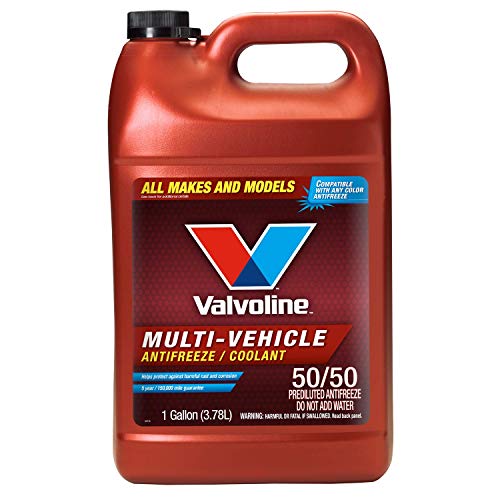
Valvoline Multi-Vehicle Antifreeze/Coolant
Valvoline’s Multi-Vehicle formula contains Alugard Plus technology for enhanced aluminum protection. This ethylene glycol-based coolant fights corrosion, scaling, and rust while remaining compatible with all cooling system metals.
07/11/2025 11:38 pm
Superior protection features: The high-quality additives protect against leaks and provide excellent heat transfer properties. The 50/50 prediluted formula simplifies maintenance while the bittering agent prevents accidental ingestion by children and pets. Professional mechanics frequently recommend this coolant for its consistent performance across vehicle types.
Proper Emergency Procedures
When using tap water in an emergency, follow these critical steps:
Wait for cooling – Allow your engine to cool completely before removing the radiator cap or adding water. Hot engines can cause severe steam burns.
Add water gradually – Pour water slowly to avoid thermal shock to hot engine components. Never add cold water to an extremely hot engine.
Monitor temperature – Watch your temperature gauge constantly while driving. If it begins rising again, stop immediately and allow further cooling.
Seek professional help – Drive directly to a service station or auto parts store to purchase proper coolant and flush the system.
Long-Term Cooling System Maintenance
Regular coolant changes every 50,000 miles help prevent the buildup of contaminants and maintain optimal protection. Understanding radiator repair costs can help you budget for necessary maintenance.
Check coolant levels monthly during routine maintenance. Look for signs of leaks, corrosion, or contamination that might indicate developing problems.
Use only recommended coolant types for your specific vehicle. Different manufacturers specify different coolant formulations, and mixing incompatible types can cause chemical reactions that damage your cooling system.
Professional system flushes remove accumulated deposits and ensure your cooling system operates at peak efficiency. This preventive maintenance costs far less than major engine repairs caused by overheating.
Radiator cap replacement should occur every few years, as worn caps can’t maintain proper system pressure. A faulty cap allows coolant to boil at lower temperatures, reducing cooling efficiency.
Remember, while tap water can serve as an emergency coolant substitute, proper antifreeze/coolant provides essential protection that water alone cannot match. Understanding when and how to use water safely can prevent catastrophic engine damage, but professional coolant should always be your permanent solution.
Related Posts
- Honda Power Steering Fluid: Complete Guide & Best Products for Smooth Steering
- 2019 Morgan Plus 4 110 Anniversary Model: Timeless British Engineering Redefined
- Maximizing Cargo Space: Best Roof Storage Solutions for Your Audi A3
- Car Heater Not Working: Complete Diagnosis and Repair Solutions
- P0128 Code: Coolant Temperature Below Thermostat Regulating Temperature