

The Ultimate Home EV Charging Solution 🚗💨
⚡Here’s everything you need to know about installing an EV charger at home, including the latest electrical codes, safety requirements, and cost-saving tips.
Installing a home EV charger is one of the smartest investments you can make as an electric vehicle owner! 🎯 Home charging costs roughly one-third the price of DC fast-charging , while offering unmatched convenience right in your driveway or garage. With proper installation, you’ll wake up every morning to a fully charged vehicle ready for your daily adventures!
Understanding EV Charger Types for Home Installation 🔌
Level 1 Charging: Standard 120V Outlet
Basic emergency charging using any household outlet delivers approximately 3-5 miles of range per hour. While Level 1 chargers come included with most EVs, they’re primarily suited for emergency situations or overnight charging for low-mileage drivers. Think of it as the “snail pace” of charging!
Pros: ✅
- No installation required
- Universal compatibility
- Portable for emergencies
Cons: ❌
- Extremely slow charging speeds
- Requires 8-12 hours for overnight charging
- Not practical for daily use
Level 2 Charging: 240V Home Solution
The gold standard for home EV charging operates on 240V circuits, delivering 25-37 miles of range per hour depending on your vehicle’s capabilities. Most Level 2 chargers can fully charge an electric vehicle in 3-6 hours 🕒, making them ideal for daily use.
Key specifications:
- Power output: 7.2kW to 11.5kW
- Charging speeds: 25-40 miles per hour
- Compatible with all electric vehicles
- Professional installation required
Level 3 DC Fast Charging: Commercial Grade
While technically possible for residential installation, Level 3 chargers are prohibitively expensive for home use, typically costing $10,000-$40,000 plus installation. These ultra-fast chargers are designed for commercial applications and highway travel corridors. Ouch! 😬
Can You Install an EV Charger Yourself? 🛠️
Critical Update: The proposed 2026 National Electrical Code includes language requiring “qualified persons” to install EV charging equipment, which many jurisdictions interpret as licensed electricians only. While this hasn’t been adopted by all states yet, DIY installations may become illegal 🚫 in many areas by 2026.
Current requirements vary by location, but most installations require:
- Electrical permits and inspections ✅
- Knowledge of NEC Article 625 electrical codes
- 240V circuit installation expertise
- GFCI protection understanding
- Load calculation capabilities
Safety considerations make professional installation highly recommended even where DIY installation remains legal. Electric shock risks, fire hazards, and code violations can result in serious injury or property damage. Don’t mess around with electricity!
Step-by-Step Professional Installation Process
1. Electrical System Assessment
A qualified electrician will evaluate your home’s electrical capacity, typically requiring:
- Load calculation analysis to determine available capacity
- Electrical panel inspection for breaker space
- Distance measurement from panel to installation location
- Grounding and wiring assessment
Most homes need 150-200 amp electrical service to safely add EV charging without upgrades.
2. Permit Acquisition
Building permits are required in most jurisdictions for EV charger installation. Your electrician typically handles:
- Permit applications and fees
- Code compliance documentation
- Inspection scheduling
- Final approval certification
3. Circuit Installation
Dedicated 240V circuits must be installed according to NEC requirements:
- 50-amp circuits for 40-amp chargers (most common)
- 60-amp circuits for 48-amp chargers (high-power units)
- GFCI protection as required by local codes
- Proper wire gauging (typically 6-8 AWG)
4. Charger Mounting and Connection 🏗️
Professional installation includes:
- Wall mounting on appropriate surfaces
- Hardwired connections or outlet installation 🔌
- Cable management and connector storage
- Final testing and commissioning
5. Inspection and Commissioning 🔎
Local electrical inspections verify:
- Code compliance
- Safety installations
- Proper grounding
- Load calculations
- Final approval certification
Choosing the Right Home EV Charger 🏆
ChargePoint HomeFlex Level 2 EV Charger (USA) Best Overall
The ChargePoint HomeFlex consistently ranks as the top choice for home EV charging, earning recognition from Car and Driver, ZDNet, and numerous automotive publications! This premium charger delivers up to 50 amps of power (37 miles per hour) with exceptional smart features.

22/01/2026 10:11 pm
Why it’s worth the investment:
- Industry-leading app with penny-accurate cost tracking
- Adjustable power output from 16-50 amps
- 23-foot cable with superior cold-weather performance
- Universal J1772 connector works with all non-Tesla EVs
- ENERGY STAR certified for efficiency
- 3-year warranty with 24/7 support network 🛡️
Real user feedback consistently highlights the intuitive app interface, reliable performance, and excellent customer support. While pricier than alternatives, the HomeFlex delivers premium features that justify the cost for serious EV owners. You get what you pay for!
Emporia Level 2 EV Charger (USA) Best Value 🎯
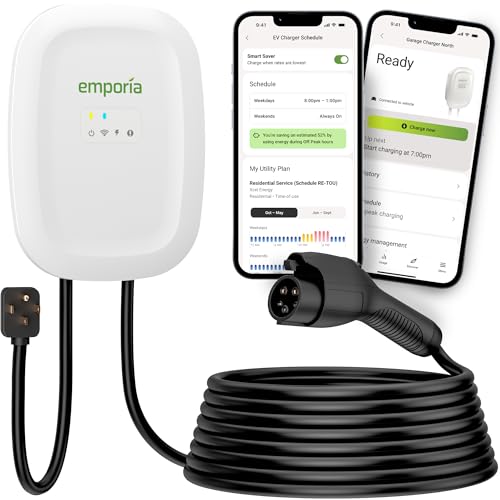
The Emporia EV charger delivers flagship features at half the price of premium competitors, making it our top budget recommendation! with nearly 2,000 reviews, this charger proves you don’t need to spend a fortune for quality. What a steal!
23/01/2026 12:53 am
Outstanding value proposition:
- 48-amp maximum output (11.5kW hardwired)
- Load management capabilities prevent electrical overloads
- Smart scheduling for off-peak charging savings 💰
- Solar integration maximizes renewable energy use
- 25-foot cable with J1772 connector 🔌
- NEMA 4 weatherproof rating for outdoor installation
Professional reviewers consistently praise the Emporia’s build quality, feature set, and exceptional value. 👍The included load management alone can save thousands in electrical panel upgrades, making this an intelligent choice for budget-conscious buyers. Smart money!
Installation Costs and Considerations 💸
Current Cost Breakdown
Standard Level 2 installation typically costs:
- Equipment: $400-$800 (charger unit)
- Installation: $500-$1,500 (basic hardwired)
- Permits: $50-$200 (varies by location)
- Total: $950-$2,500 for standard installation
Additional costs may include: 😬
- Electrical panel upgrades: $1,000-$3,000
- Trenching for detached garages: $500-$2,000
- Distance charges: $100-$500 per additional 25 feet
- GFCI breaker upgrades: $150-$300
Money-Saving Tips
Federal tax credits may apply to both equipment and installation costs! Many utility companies offer rebates ranging from $250-$500 for home charger installation. Ka-ching! Time-of-use electricity rates can reduce charging costs by 50% or more during off-peak hours. Night owls win! 🦉
Smart Features and Future-Proofing
Advanced Capabilities
Modern EV chargers offer sophisticated features:
- WiFi connectivity for remote monitoring
- Smartphone apps for scheduling and control
- Energy usage tracking with cost calculations
- Solar integration for renewable charging
- Load balancing to prevent electrical overloads ⚖️
Understanding modern vehicle technology becomes increasingly important as EVs integrate with home energy systems! Just as BMW’s Dynamic Stability Control enhances vehicle safety through electronic monitoring, smart EV chargers use advanced sensors and controls to optimize charging performance and protect your home’s electrical system. Technology is amazing! 🤯
Safety and Code Compliance
Critical Safety Requirements
Proper installation prevents electrical hazards through:
- GFCI protection to prevent electrocution
- Dedicated circuits to prevent overloads
- Proper grounding for safety
- Weather-resistant installations for outdoor use
- Code-compliant wiring meeting NEC standards
The evolution of automotive technology mirrors the complexity of modern EV charging systems. While deciding whether to buy an electric vehicle involves considering range and charging infrastructure, proper home charging installation remains the foundation of convenient EV ownership.
Regional Considerations and Incentives
Government Support Programs
Federal incentives include potential tax credits for charging equipment installation. State and local programs vary significantly, with some offering:
- Rebates up to $1,000 for home chargers
- Reduced electricity rates for EV charging
- Installation cost assistance for qualified homeowners
- Fast-track permitting for residential installations
Climate considerations affect charger performance and installation requirements. Cold-weather installations need specific cable types and weatherproofing, while hot climates require proper ventilation and heat management.
Installation Comparison Table
| Feature | Level 1 | Level 2 | Level 3 |
|---|---|---|---|
| Voltage | 120V | 240V | 400-800V |
| Charging Speed | 3-5 mi/hr | 25-40 mi/hr | 150-300 mi/hr |
| Installation Cost | $0 | $950-$2,500 | $10,000+ |
| Home Suitability | ✅ Basic | ✅ Ideal | ❌ Impractical |
| Professional Required | ❌ No | ✅ Yes | ✅ Yes |
| Permits Needed | ❌ No | ✅ Yes | ✅ Yes |
Troubleshooting Common Installation Issues
Electrical Panel Limitations
Insufficient electrical capacity is the most common installation challenge. Load management systems can often solve this problem without expensive panel upgrades. Smart chargers automatically reduce power when other appliances operate, maximizing available capacity.
Distance and Location Challenges
Long cable runs increase installation costs but remain manageable for most homes. Detached garages require underground wiring, typically adding $500-$2,000 to installation costs. Proper planning minimizes these expenses through strategic charger placement.
Permit and Inspection Delays
Municipal approval processes can extend installation timelines by 2-4 weeks. Working with experienced electricians familiar with local requirements streamlines the process. Some jurisdictions offer expedited permitting for residential EV charger installations.
Future-Proofing Your Installation
Bidirectional Charging Preparation
Vehicle-to-home (V2H) technology allows EVs to power homes during outages. Installing higher-capacity circuits now prepares your home for this emerging technology. Smart chargers with upgrade capabilities offer the best long-term value.
Multiple Vehicle Considerations
Growing EV adoption means many households will eventually own multiple electric vehicles. Installing oversized electrical infrastructure accommodates future expansion. Load sharing technologies allow multiple chargers to share single circuits efficiently.
As electric vehicle adoption accelerates, home charging infrastructure becomes increasingly valuable for property values and daily convenience.
Conclusion 🎯
Installing a home EV charger transforms electric vehicle ownership from occasional inconvenience to daily luxury! 🌟 Professional installation ensures safety, code compliance, and optimal performance while maximizing your investment in electric transportation.
The combination of falling equipment costs, improving technology, and growing incentive programs makes now an ideal time for home charger installation. 📈 Whether you choose premium features or budget-friendly options, proper installation creates the foundation for years of convenient, cost-effective charging.
Starting your EV charging journey requires careful planning, but the rewards of home charging—convenience, cost savings, and energy independence—make the investment worthwhile for every electric vehicle owner! 🚗💚 Say goodbye to gas station visits and hello to waking up with a full “tank” every morning! ☀️⚡
Related Posts
- Electric Car Batteries: Environmental Impact and Recycling Solutions
- Euro 7 Emissions Standards 2026: The Revolutionary New Rules Transforming European Cars
- Should You Buy An Electric Vehicle? Why the EV Dream is Failing in the UK While America Offers Hope
- How to Bleed Brakes on an Older Car Naturally
- Electric Cars With The Longest Range in the USA in 2025 ⚡