

The Fluke 117 vs Fluke 115 – Choosing Between Two Top-Rated Fluke Multimeters for Electrical Work
Professional electricians and engineers need reliable diagnostic tools that deliver accurate readings every time. The Fluke 117 vs Fluke 115 comparison reveals two exceptional digital multimeters with distinct advantages – one featuring advanced non-contact voltage detection while the other offers solid performance at a lower price point. Understanding these differences helps you select the right electrical testing equipment for your specific needs. ⚡
Both models represent Fluke’s commitment to quality in the professional multimeter market, but their feature sets target different user requirements. Whether you’re troubleshooting complex electrical systems or handling routine maintenance tasks, choosing between these TRUE RMS multimeters requires careful consideration of their capabilities.
Core Differences Between Fluke 117 and Fluke 115
The most significant distinction lies in the Fluke 117’s advanced voltage detection capabilities. This model incorporates VoltAlert technology for non-contact voltage detection, eliminating the need for direct wire contact in many situations. Additionally, it features low input impedance that prevents false readings from ghost voltages – a common issue in modern electrical systems.
The Fluke 115 digital multimeter takes a more straightforward approach, focusing on core measurement functions without the advanced detection features. It provides reliable 10A current measurement capabilities and maintains the same build quality standards that make Fluke multimeters industry favorites.
For automotive diagnostics, having accurate electrical measurements proves crucial. Many professionals working on vehicle electrical systems rely on these types of precision instruments for troubleshooting complex electronic components.
VoltAlert Technology: Game-Changer for Electricians
The Fluke 117’s VoltAlert technology represents a significant advancement in electrical safety equipment. This non-contact voltage detection system allows technicians to identify live wires without physical contact, dramatically improving safety in tight spaces or when working around potentially energized circuits.
Fluke 117 Electrician’s True RMS Multimeter
The Fluke 117 Electrician’s True RMS Multimeter stands out as a premium choice for electrical professionals who demand advanced features and enhanced safety. This model combines traditional multimeter functions with modern detection technology, creating a versatile tool that adapts to various work environments.

22/01/2026 5:33 pm
Professional electricians consistently praise its performance in real-world applications. The TRUE RMS measurement capability handles both clean and distorted waveforms accurately, while the automatic voltage selection streamlines the testing process. These features prove especially valuable when working on commercial installations or troubleshooting industrial equipment.
Key Features:
- Non-contact voltage detection with VoltAlert technology
- Low input impedance prevents ghost voltage readings
- Automatic voltage selection (AutoV)
- TRUE RMS measurement for accurate AC readings
- CAT III 600V safety rating
Best for: Professional electricians, commercial electrical contractors, and industrial maintenance technicians who work in tight spaces or around potentially live circuits.
Limitations: Higher price point compared to basic models, and frequency measurements above 50 kHz may affect optimal performance. Some users report that diode testing isn’t as precise as specialized diode testers.
One verified purchaser noted: “The non-contact voltage detection has saved me countless hours and potentially dangerous situations. I can quickly identify live wires through conduit or behind panels without having to make direct contact.”
This advanced electrical diagnostic tool justifies its premium pricing through enhanced safety features and time-saving capabilities that professional electricians value.
Traditional Reliability: Fluke 115 Performance
The Fluke 115 True RMS Digital Multimeter appeals to users who prioritize fundamental measurement accuracy without advanced detection features. This model delivers consistent performance across standard electrical testing applications while maintaining Fluke’s reputation for durability and precision.

22/01/2026 5:33 pm
Compact multimeter design makes the Fluke 115 ideal for fieldwork and general electrical troubleshooting. Its ergonomic construction fits comfortably in one hand, while the backlit display ensures readings remain visible in dimly lit work environments.
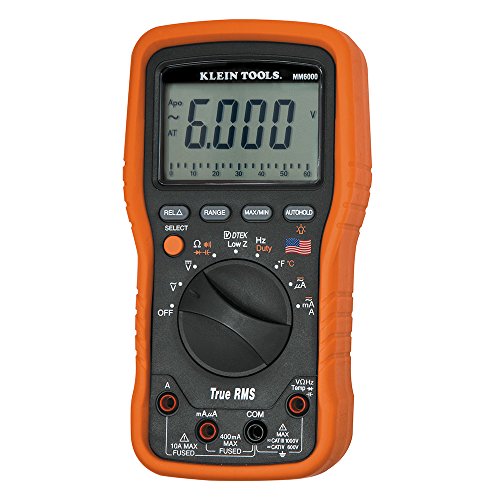
Klein Tools MM6000 Electrician’s Multimeter
For professionals seeking an alternative with additional features, the Klein Tools MM6000 Electrician’s Multimeter offers comprehensive functionality at a competitive price point. This auto-ranging digital multimeter includes GFCI receptacle testing, low impedance measurement, and non-contact voltage detection similar to higher-end Fluke models.
22/01/2026 5:33 pm
Key Features:
- Auto-ranging measurement eliminates manual range selection
- GFCI outlet testing capability
- Non-contact voltage detection
- Low impedance (LoZ) mode prevents ghost readings
- CAT IV 600V, CAT III 1000V safety ratings
Best for: Electricians and contractors who want premium features without the Fluke price premium, particularly those working on residential and light commercial projects.
Limitations: Some users report the auto-ranging can be slower than manual range selection, and the display contrast may be challenging to read at certain angles.
A professional electrician shared: “This meter gives me most of the features I need from a Fluke 117 at a fraction of the cost. The GFCI testing alone has paid for itself multiple times over.”
This professional electrical tester bridges the gap between basic multimeters and premium models, offering advanced features at a more accessible price point.
Safety Standards and Professional Applications
Both Fluke multimeters meet CAT III 600V safety standards, making them suitable for most residential and light commercial electrical work. These safety ratings indicate the meters can safely measure circuits in distribution panels, motor control centers, and similar installations.
Electrical safety compliance remains paramount when selecting professional test equipment. The robust construction of both models includes drop protection and overload protection that safeguards against common workplace hazards.
Understanding proper multimeter calibration procedures ensures accurate readings throughout the instrument’s service life. Both models include protected calibration access with security codes to prevent unauthorized adjustments that could compromise measurement accuracy.
Measurement Capabilities and Accuracy
The TRUE RMS measurement technology in both models provides accurate readings of distorted AC waveforms commonly found in modern electrical systems. This capability proves essential when working with variable frequency drives, switching power supplies, and other electronic equipment that produces non-sinusoidal waveforms.
Resistance measurement range extends to 40 MΩ on both models, covering most practical electrical testing scenarios. The frequency measurement capability handles most power system frequencies, though the Fluke 117 may experience reduced accuracy above 50 kHz.
Fluke 87V Industrial Multimeter
For demanding industrial applications, the Fluke 87V Industrial Multimeter represents the pinnacle of professional electrical testing equipment. This advanced model includes features like peak hold, relative mode, and enhanced measurement accuracy that exceed the capabilities of both the 115 and 117 models.

22/01/2026 5:33 pm
Key Features:
- Enhanced accuracy (0.05% basic DCV accuracy)
- Peak hold function captures transient readings
- Relative mode for comparative measurements
- Temperature measurement with included probe
- Duty cycle measurement capability
Best for: Industrial maintenance professionals, power system technicians, and engineers working with precision electronic equipment or critical power systems.
Limitations: Significantly higher cost than the 115/117 series, and the additional features may be unnecessary for basic electrical work.
An industrial maintenance manager explained: “The 87V’s accuracy and additional measurement modes are essential for our preventive maintenance program. The investment pays off through reduced downtime and more reliable equipment monitoring.”
This industrial-grade multimeter serves professionals who require maximum accuracy and comprehensive measurement capabilities in demanding environments.
Battery Life and Durability Factors
Alkaline battery operation in both models provides extended field use, typically lasting 200+ hours of normal operation. The battery indicator warns users before power levels become critically low, preventing interrupted testing procedures.
Protective housing design includes rubberized corners and reinforced construction that withstands drops from typical working heights. Both models include carrying cases that provide additional protection during transport and storage.
Professional users appreciate the ergonomic design that enables comfortable one-handed operation during extended testing sessions. The curved body shape and textured grip surfaces reduce hand fatigue and improve control in challenging work environments.
Value Proposition and Investment Considerations
The Fluke 117 vs 115 price comparison typically shows a $50-100 difference, with the 117 commanding a premium for its advanced features. For professionals who frequently work in tight spaces or around potentially live circuits, the non-contact voltage detection capability often justifies the additional investment.
Three-year warranty coverage on both models reflects Fluke’s confidence in their construction quality and provides peace of mind for professional users who depend on their instruments daily.
When evaluating return on investment, consider how advanced features like VoltAlert technology and low input impedance can improve work efficiency and safety. Time saved troubleshooting ghost voltage issues or avoiding safety incidents often recovers the initial cost difference quickly.
Professional Recommendations and Use Cases
Commercial electricians typically benefit most from the Fluke 117’s advanced features, particularly when working on office buildings, retail spaces, or other environments with complex electrical systems. The non-contact detection capability proves invaluable when tracing circuits behind finished walls or in crowded panel boxes.
Residential electricians may find the Fluke 115 adequate for most applications, especially when budget considerations are important. The core measurement functions handle typical household electrical troubleshooting effectively.
Industrial maintenance teams often require the additional accuracy and features found in higher-end models, making the Fluke 87V or similar instruments more appropriate choices despite the higher cost.
For automotive electrical work, precision measurements become critical when diagnosing modern vehicle electronics. Professional technicians working on automotive electrical systems need reliable instruments that can handle the unique requirements of automotive diagnostics.
Making the Right Choice for Your Needs
Professional multimeter selection should align with your specific work requirements and safety priorities. The Fluke 117 digital multimeter excels in environments where electrical safety and advanced detection capabilities provide significant value.
Budget-conscious professionals who primarily need accurate basic measurements may find the Fluke 115 offers the best balance of quality and cost-effectiveness.
Consider your typical work environment, safety requirements, and measurement accuracy needs when making this investment decision. Both models provide the reliability and accuracy that make Fluke multimeters the preferred choice among electrical professionals worldwide.