
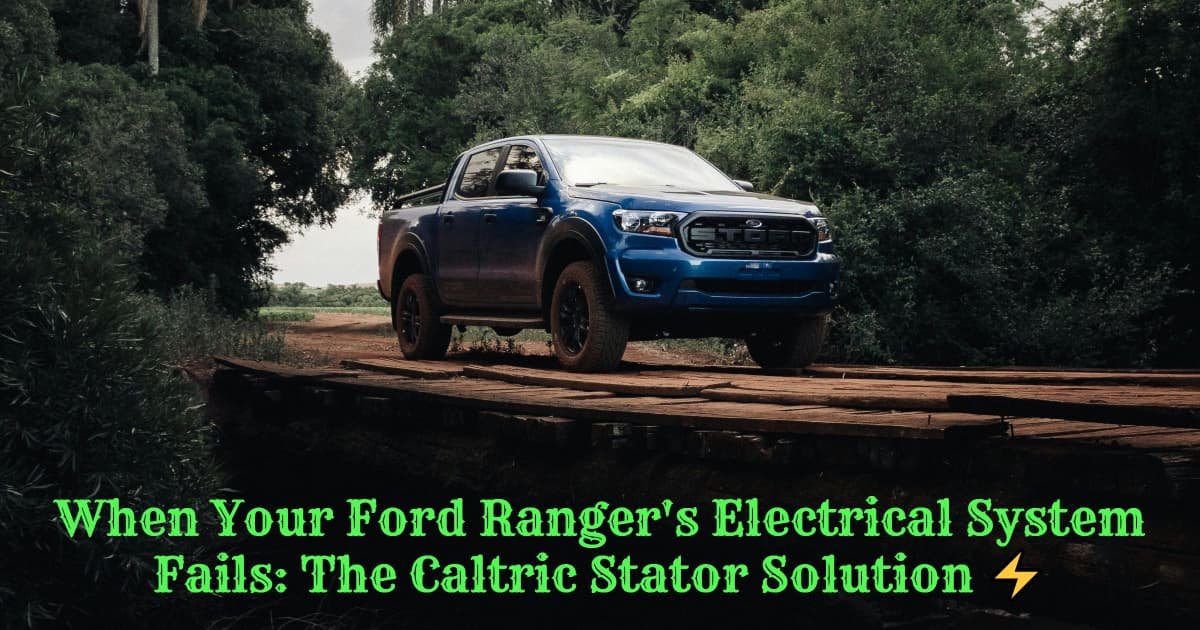
Why Your Truck’s Alternator Problems Could Leave You Stranded
When your Ford Ranger starts showing signs of electrical weakness – dimming headlights, struggling wipers, or radio cutting out – you’re likely facing alternator problems that could leave you stranded on a dark highway. The culprit is often a failing stator, the heart of your charging system that keeps your battery powered and your electrical components running smoothly. 🚗
Every Ford Ranger owner knows the frustration of electrical gremlins creeping in after years of reliable service. One day your truck starts perfectly, the next you’re dealing with dashboard lights that flicker like a haunted house and wipers that barely clear morning frost from your windshield.
The problem becomes critical when you upgrade your sound system or add power-hungry accessories. When the Ford alternator is going bad, you will notice that your headlights and dashboard lights are dim. The windows will take longer than usual to roll up and down, and the windshield wipers struggle to operate effectively.
Understanding how your alternator’s stator works – and when to replace it – could save you from dangerous roadside breakdowns and expensive towing bills.
Understanding Your Alternator’s Stator System 🔧
The stator is a stationary component inside your alternator that works with the spinning rotor to generate electricity. When your engine runs, the crankshaft drives a belt connected to the alternator, creating the mechanical energy needed for electrical generation.
Most common issue with alternator failure is field failure, either the wiring or diode pair, this limits the voltage output at lower RPMs. I.E. dimming lights when at idle, no that is NOT normal – a clear sign your stator needs attention.
The stator consists of:
- Copper windings wrapped around iron cores
- Electromagnetic coils that create the magnetic field
- Diodes that convert AC current to DC power
- Voltage regulator that controls power output
When any of these components fail, your entire electrical system suffers.
Warning Signs Your Stator Is Failing ⚠️
Electrical Component Issues
- Headlights dimming at idle
- Radio cutting out unexpectedly
- Dashboard lights flickering
- Slow or weak windshield wipers
- Windows operating sluggishly
Battery Problems
- Difficulty starting the engine
- Battery light illuminated on dash
- Frequent jump-starts needed
- Battery draining while parked
Sound System Troubles
If you’ve upgraded your audio system, you may notice these problems first. Subwoofers and amplifiers draw significant power, making stator weaknesses more apparent during operation.
Why Choose Caltric Over OEM Stators? 💪
We are the largest distributor for performance and aftermarket powersports parts in the United States. We manufacture and resell premium quality replacement parts for various applications including automotive systems.
Caltric stators offer several advantages:
- Higher power output than many OEM units
- Premium copper windings for better conductivity
- Enhanced heat resistance up to 200+ degrees Celsius
- Cost-effective compared to dealer replacement parts
- Wide compatibility across vehicle years and models
Caltric 528,000 sales and a 99.3% positive rating. That pretty good speaks to their reliability in real-world applications.
Professional Installation Considerations 🔨
While stator replacement isn’t overly complex, proper installation ensures optimal performance:
Ground Strap Upgrades
When installing a higher-output stator, consider upgrading:
- Battery ground cables to handle increased current
- Alternator power leads for better conductivity
- Chassis ground connections to prevent voltage drops
Connector Compatibility
Some aftermarket stators may require:
- Reusing OEM connectors
- Minor wiring modifications
- Professional crimping tools for connections
Most installations can be completed in 2-3 hours with basic tools, though consulting a mechanic ensures proper setup.
Top Caltric Stator Recommendations 🏆
Caltric Stator Compatible with Polaris Sportsman 500 HO
This complete stator and regulator rectifier kit delivers reliable power for demanding applications. Built with high-grade copper windings and designed for direct OEM replacement, it handles the power demands of modern electrical systems without overheating issues.

20/06/2026 3:57 am
Key Features:
- High-quality copper windings for maximum efficiency
- Includes voltage regulator rectifier
- Direct bolt-in replacement design
- One-year manufacturer warranty
- Compatible with multiple vehicle years
Best for: Polaris ATV owners experiencing charging system failures or those upgrading electrical systems for increased power demands.
Known limitations: Installation may require some wiring modifications, and no detailed manual is included.
Owner insight: “Installed this on my Sportsman after the OEM unit failed during a hunting trip. The power output is noticeably stronger, and my LED light bar no longer dims when idling. Worth every penny for the peace of mind.” – Verified purchaser review
Electrosport ESG158 Stator for High-Performance Applications
For riders demanding premium quality and maximum reliability, this Electrosport unit represents the gold standard in aftermarket stators. The precision-wound copper coils and robust construction make it ideal for heavy electrical loads.

20/06/2026 3:57 am
Key Features:
- Premium-grade copper windings with optimized resistance
- High output even at low RPM operation
- Complete connector kit included for easy installation
- Extensive quality testing and certification
- Professional-grade construction standards
Best for: Serious off-road enthusiasts, commercial operators, or anyone requiring maximum electrical system reliability.
Known limitations: Higher price point compared to basic replacement units, though the quality justifies the investment.
Owner insight: “After going through two cheaper stators in one season, I invested in the Electrosport unit. It’s been flawless for over two years of hard use, powering winches, lights, and heated gear without missing a beat.” – Professional guide testimonial
Power Output Calculations Made Simple 📊
Determining Your Needs
Before selecting a stator, calculate your electrical load:
| Component | Typical Draw |
|---|---|
| Headlights | 10-15 amps |
| Sound system | 20-40 amps |
| Heating/AC | 15-25 amps |
| LED light bars | 5-20 amps |
| Winch operation | 100-400 amps |
Safety Margins
Always choose a stator rated 30-50% above your calculated needs. This ensures:
- Adequate power during peak demand
- Longer component lifespan
- Proper battery charging while running accessories
- Reserve capacity for future upgrades
Installation Tips for Success 🛠️
Pre-Installation Checklist
- Test battery condition and connections
- Inspect existing wiring for damage or corrosion
- Verify belt tension and condition
- Clean all electrical connections thoroughly
Post-Installation Testing
- Check charging voltage at idle (13.5-14.5 volts)
- Test under load with accessories running
- Verify proper belt alignment and tension
- Monitor system for first few operating hours
Maintenance for Long-Term Reliability 🔄
Regular Inspections
- Belt condition – Replace if cracked or glazed
- Electrical connections – Clean and tighten annually
- Ventilation – Keep alternator cooling vents clear
- Mounting bolts – Check torque specifications
Performance Monitoring
Watch for early warning signs:
- Voltage readings below 13.5V at idle
- Unusual noises from alternator area
- Burning smells during operation
- Excessive heat from alternator housing
Troubleshooting Common Issues 🔍
Intermittent Charging
Often caused by:
- Loose electrical connections
- Worn carbon brushes
- Faulty voltage regulator
- Damaged wiring harness
No Charging Output
Check these components first:
- Alternator fuse in power distribution box
- Drive belt tension and condition
- Battery terminals for corrosion
- Ground connections for continuity
Check the alternator field fuse in the underhood power distributon box, drivers side in the corner where the firewall & fender meet. If it’s blown, the alternator won’t charge – a simple fix that’s often overlooked.
Cost-Effectiveness Analysis 💰
Replacement vs. Rebuild Costs
- New OEM stator: $200-400
- Caltric aftermarket: $80-150
- Professional installation: $150-300
- Complete alternator rebuild: $300-500
Long-term Value
Quality aftermarket stators like Caltric units often provide:
- Better performance than original equipment
- Longer service life with proper installation
- Warranty protection against defects
- Significant cost savings over dealer parts
Final Recommendations ✅
Choosing the right Caltric stator depends on your specific needs:
For basic replacement: Standard Caltric units offer excellent value and reliability for stock electrical systems.
For upgraded systems: Higher-output models handle aftermarket accessories and provide reserve capacity for future modifications.
For professional use: Premium units like Electrosport provide maximum reliability for commercial or extreme-duty applications.
The key to success lies in proper installation, adequate power sizing, and regular maintenance. With the right stator and professional installation, your Ford Ranger’s electrical system will provide years of reliable service, keeping you safely on the road regardless of conditions. 🛣️
Don’t wait until you’re stranded with electrical failures – address charging system problems proactively to maintain your vehicle’s reliability and safety.
Related Posts
- Honda Power Steering Fluid: Complete Guide & Best Products for Smooth Steering
- 2019 Morgan Plus 4 110 Anniversary Model: Timeless British Engineering Redefined
- Car Heater Not Working: Complete Diagnosis and Repair Solutions
- P0128 Code: Coolant Temperature Below Thermostat Regulating Temperature
- Best 12V Battery Chargers for Motorhomes