

Why Your Motorhome Needs a Quality 12V Battery Charger
Dead batteries have ruined more RV trips than flat tires and bad weather combined. But with the right 12V battery charger, you’ll never experience that dreaded clicking sound when trying to start your motorhome or run your house batteries dry during a perfect boondocking spot.
Whether you’re a weekend warrior or a full-time RVer, having a reliable battery charger is essential for maintaining your motorhome’s power system. The difference between a quality charger and a poor one can mean the difference between batteries lasting 4-6 years versus replacing them annually.
In this comprehensive guide, we’ll review the best 12V battery chargers for motorhomes in 2025, explain the crucial features to look for, and help you choose the perfect charger for your specific needs and battery type.
Many motorhome owners don’t realize that their built-in converter/charger might be slowly killing their expensive batteries. American motorhomes often come with basic chargers that only charge at 12.5 volts – suitable for running 12-volt bulbs but providing only 80% charge capacity when accounting for voltage drop.
Here’s why investing in a quality battery charger matters:
- Extended Battery Life: A proper multi-stage charger can double or triple your battery lifespan, saving hundreds of dollars in replacement costs
- Safety First: Modern smart chargers prevent overcharging, which can cause battery damage, fire hazards, and toxic gas emissions
- Faster Charging: Quality chargers deliver optimal amperage for your battery type, reducing charging time significantly
- Battery Recovery: Advanced chargers with desulfation modes can revive batteries you thought were dead
The difference between converter/chargers and dedicated battery chargers is crucial. While converter/chargers supply power to your RV’s 12V system and charge batteries simultaneously, dedicated battery chargers focus solely on optimal battery charging, delivering higher voltages (up to 15V) for complete charging cycles.
Top Best 12V Battery Chargers for Motorhomes
After extensive research and testing, here are the top-rated 12V battery chargers for motorhome applications:
Quick Comparison Table
| Model | Amperage | Battery Types | Price Range | Best For |
|---|---|---|---|---|
| NOCO Genius10 | 10A | All types + Lithium | $100-120 | Best Overall |
| Battery Tender 10 AMP | 10/6/2A | Multi-chemistry | $65-100 | Versatility |
| Renogy 12V 20A | 20A | Focus on Lithium | $150-200 | Lithium Batteries |
| CTEK MXS 10 | 10A | All lead-acid | $120-150 | European RVs |
| Schumacher SC1280 | 15A | Lead-acid/AGM | $80-100 | Fast Charging |
1. NOCO Genius10 – Best Overall Smart Charger
The NOCO Genius10 stands out as our top pick for motorhome battery charging. This compact powerhouse delivers 17% more power than its predecessor while being 115% smaller. It’s a true all-in-one solution functioning as a battery charger, maintainer, trickle charger, and desulfator.

07/11/2025 7:17 pm
Key Features:
- 10-amp charging for 6V and 12V batteries
- Compatible with all battery types including lithium (LiFePO4)
- Integrated thermal sensor for temperature compensation
- Can charge completely dead batteries (even 0 volts with Force Mode)
- Automatic desulfation mode for battery recovery
Pros:
- Fully automatic operation – set and forget
- Excellent build quality with IP65 weatherproofing
- Can revive deeply discharged batteries
- Works with batteries from 20Ah to 230Ah
Cons: Storage case sold separately ($24.95)
Can occasionally fail to initiate charging (requires reset)
Higher price point than basic chargers
Real-world testing shows the Genius10 can bring a dead battery back to life that other chargers won’t even recognize. Users report successfully reviving batteries that sat unused for over a year.
2. Battery Tender 10 AMP – Best Multi-Chemistry Charger
The Battery Tender 10 AMP model offers switchable amperage (10A/6A/2A) and selectable chemistry settings, making it perfect for RVers with multiple battery types. Its versatility extends from small motorcycle batteries to large motorhome battery banks.

07/11/2025 7:17 pm
Key Features:
- Three selectable charge rates
- Chemistry selection for standard, AGM, and lithium batteries
- Spark-proof and reverse polarity protected
- 4-step charging program
This charger excels at providing the right charge for the right battery, preventing the common mistake of using incorrect charging profiles that can damage expensive batteries.
3. Renogy 12V 20A – Best for Lithium Batteries
For motorhome owners who’ve upgraded to lithium batteries, the Renogy 12V 20A charger is specifically designed with LiFePO4 technology in mind. It features advanced 3-stage charging optimized for lithium chemistry.

07/11/2025 7:17 pm
Key Features:
- 20-amp output for faster charging
- Multiple safety protections including over-temperature
- DC-DC isolation for voltage stability
- Compatible with AGM, flooded, gel, and lithium
The fast 20A charging rate means you can fully charge a 100Ah lithium battery in just 5-6 hours, perfect for boondockers relying on limited generator runtime.
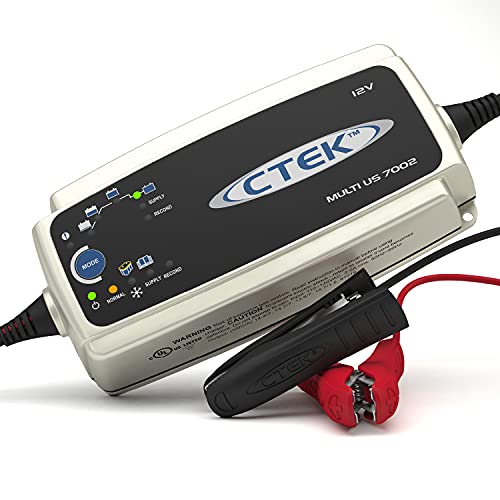
4. CTEK MXS 10 – Best for European Motorhomes
CTEK chargers have an excellent reputation in the European RV community. The MXS 10 is a fully automated 12V 10A charger with dedicated reconditioning modes that can more than double battery life.
07/11/2025 7:17 pm
Why it’s great for European motorhomes:
- CE certified for European electrical standards
- 8-step charging program including desulfation
- Temperature compensation for varying climates
- 5-year warranty
5. Schumacher SC1280 – Best Budget Fast Charger
The Schumacher SC1280 delivers 15-amp rapid charging at a budget-friendly price point. While it lacks some advanced features, it excels at quickly bringing batteries back to usable health.

07/11/2025 7:17 pm
Notable aspects:
- LED display shows real-time charging information
- Automatic voltage detection
- Built-in desulfation mode
- Float mode monitoring for maintenance
Note: This unit runs louder than others due to constant fan operation – not ideal for quiet campgrounds.
Understanding Battery Types and Charging Requirements
Choosing the right charger starts with understanding your battery type. Each chemistry requires specific charging voltages and profiles to maximize performance and lifespan.
AGM Battery Charging Specifics
AGM (Absorbed Glass Mat) batteries require careful charging to prevent damage. They need:
- Charging voltage: 14.4-14.8V
- Float voltage: 13.2-13.8V
- Temperature compensation to prevent overheating
- Never exceed 15V or use equalization modes
AGM batteries can accept higher charge rates than flooded batteries, typically up to 0.3C (30 amps for a 100Ah battery).
Lithium Battery Special Considerations
Lithium (LiFePO4) batteries have revolutionized RV power systems but require specific charging parameters:
- Bulk charge voltage: 14.4-14.6V
- No float stage needed (can stress the battery)
- Can accept charge rates up to 0.8C or even 1C
- Temperature cutoff below 32°F (0°C) is critical
Unlike lead-acid batteries, lithium prefers partial charges and doesn’t need to be kept at 100% state of charge.
Multi-Chemistry Charger Benefits
Investing in a multi-chemistry charger provides flexibility for:
- Future battery upgrades without replacing the charger
- Charging different battery types (house vs. chassis batteries)
- Helping fellow RVers with different battery types
Essential Features to Look For
When selecting a motorhome battery charger, these features separate quality units from basic models:
Smart Charging Explained
Multi-stage charging is non-negotiable for modern battery care. Look for at least 3-stage charging:
- Bulk Stage: Delivers maximum current until battery reaches ~80% charge
- Absorption Stage: Reduces current while maintaining voltage to reach 100%
- Float Stage: Maintains full charge without overcharging
Advanced chargers add stages like:
- Desulfation: Breaks down lead sulfate crystals
- Reconditioning: Restores battery capacity
- Storage mode: Optimizes long-term battery health
Safety Features That Matter
Essential safety features include:
- Reverse polarity protection – Prevents damage from incorrect connections
- Spark-proof technology – Eliminates fire hazards
- Over-temperature protection – Shuts down if overheating detected
- Short circuit protection – Prevents electrical damage
Connectivity Options (Bluetooth, Apps)
Modern chargers often include:
- Bluetooth connectivity for remote monitoring
- Smartphone apps showing real-time charging data
- Historical charging logs
- Push notifications when charging complete
These features are particularly valuable for motorhome owners who may have batteries in hard-to-reach locations.
Battery Charger Selection for Boondocking and Dry Camping
Boondockers face unique charging challenges without shore power access. The right charger strategy can mean the difference between cutting trips short or enjoying extended off-grid adventures.
Solar and Charger Integration
When combining solar with AC charging:
- Ensure your charger can work alongside solar controllers
- Look for chargers with “power supply mode” for running 12V loads while charging
- Consider chargers that can be triggered by generator auto-start systems
Many boondockers use a high-amperage charger (20A+) with their generator to minimize runtime while maximizing charge input.
Quick Charging for Limited Generator Use
To maximize generator efficiency:
- Choose chargers with at least 20A output for 100Ah+ battery banks
- Run generators during bulk charging phase (most efficient)
- Combine with solar for the absorption phase
- A 30A charger can charge a 200Ah battery bank to 80% in just 5-6 hours
Installation and Setup Guide
Proper installation ensures safe, efficient charging and prevents damage to your expensive batteries.
Permanent Installation Steps
For hardwired installations:
- Location Selection: Choose a well-ventilated area away from batteries
- Mounting: Secure charger to prevent movement during travel
- Wiring: Use appropriate gauge wire (typically 10-12 AWG for 10-20A chargers)
- Circuit Protection: Install inline fuses near the battery
- Grounding: Connect chassis ground for safety
Always disconnect shore power before working on electrical systems!
Portable Charger Connections
For portable use:
- Ensure battery compartment ventilation during charging
- Use quality alligator clips or ring terminals
- Keep connections clean and tight
- Store charger in dry location when not in use
Common Installation Mistakes
Avoid these errors:
- Undersized wiring causing voltage drop and slow charging
- Poor ventilation leading to overheating
- Mixing battery types on the same charger
- Ignoring temperature compensation in extreme climates
Maintenance Tips to Maximize Battery Life
Regular maintenance combined with proper charging can extend battery life dramatically.
Monthly maintenance checklist:
- Check and clean battery terminals
- Verify proper charger operation (LEDs, display)
- Test battery voltage with multimeter
- Inspect cables for corrosion or damage
- Ensure ventilation areas remain clear
Seasonal considerations:
- Summer: Monitor for overheating, ensure temperature compensation active
- Winter: Consider battery warmers for lithium, maintain charge above 50% for lead-acid
- Storage: Use float/maintenance mode or disconnect batteries entirely
Frequently Asked Questions
Can I leave my battery charger connected all the time?
Quality smart chargers with proper float modes can be left connected indefinitely for lead-acid batteries. However, lithium batteries prefer to be stored at 40-80% charge and shouldn’t be kept on constant float charge.
What size charger do I need for my motorhome?
As a rule of thumb, choose a charger with 10-20% of your battery bank’s amp-hour capacity. For example, a 200Ah battery bank works well with a 20-40A charger. Bigger isn’t always better – excessive charging current can damage batteries.
Will a car battery charger work for my RV?
While basic car chargers may work in emergencies, they often lack the multi-stage charging profiles needed for deep-cycle RV batteries. RV-specific chargers provide better charging algorithms for the deep discharge cycles common in RV use.
How often should I charge my motorhome battery?
Never let lead-acid batteries drop below 50% state of charge. Ideally, recharge when they reach 70-80%. Lithium batteries can be discharged to 20% without damage. During storage, check monthly and recharge if voltage drops below 12.4V (lead-acid) or 13.0V (lithium).
Conclusion
Choosing the right 12V battery charger for your motorhome is an investment in reliability, safety, and long-term savings. The NOCO Genius10 stands out as our top overall pick for its versatility and advanced features, while budget-conscious buyers will find excellent value in the Schumacher SC1280.
Remember that the best charger for you depends on your specific battery type, camping style, and power needs. Whether you’re a weekend warrior using AGM batteries or a full-time boondocker with a lithium setup, investing in a quality smart charger will pay dividends in battery life and peace of mind.
Take action today to protect your battery investment. Your future self will thank you when you’re enjoying that perfect camping spot without worrying about dead batteries!
Related Posts
- Deep Cycle vs Regular Battery: Which One Powers Your Ride Best? 🔋
- Honda Power Steering Fluid: Complete Guide & Best Products for Smooth Steering
- 2019 Morgan Plus 4 110 Anniversary Model: Timeless British Engineering Redefined
- Maximizing Cargo Space: Best Roof Storage Solutions for Your Audi A3
- Car Heater Not Working: Complete Diagnosis and Repair Solutions