
Making the Right Choice for Your Vehicle’s Power Needs
Choosing between AGM and gel batteries can feel overwhelming, but understanding their key differences will help you make the smart choice for your car. While both are advanced lead-acid technologies that outperform traditional flooded batteries, they serve different purposes and excel in different conditions. ⚡
The automotive battery landscape has evolved dramatically beyond basic flooded batteries. Today’s advanced AGM (Absorbent Glass Mat) and gel batteries offer superior performance, safety, and reliability. However, AGM models outsell gel batteries at about 100 to 1, primarily due to cost differences and versatility.
What Are AGM and Gel Batteries? 🚗
AGM Battery Technology
AGM stands for Absorbent Glass Mat – a technology that uses fiberglass mats to absorb sulfuric acid, creating a spill-proof, maintenance-free battery. AGMs are versatile batteries that tend to outsell Gel batteries by at least 100 to 1. The main reason for their versatility is that they can release high bursts of amps and hold under load at lower depths of discharge.
Key AGM features:
- Fiberglass mat construction absorbs all electrolyte
- Spill-proof and maintenance-free design
- High current output capabilities
- Faster charging than gel batteries
- Lower internal resistance
Gel Battery Technology
Gel batteries use sulfuric acid mixed with silica to create a thick, gel-like electrolyte that doesn’t spill even if the battery case cracks. This immobile electrolyte allows for deep discharge capabilities and extended cycle life.
Key gel features:
- Gel electrolyte prevents spillage
- Excellent deep-cycle performance
- Low self-discharge rate
- Performs well in extreme temperatures
- Sensitive to charging voltage
AGM vs Gel: Head-to-Head Comparison 📊
| Feature | AGM Battery | Gel Battery |
|---|---|---|
| Power Output | High burst current | Lower discharge rate |
| Charging Speed | Fast (4-6 hours) | Slower charging required |
| Cold Weather | Excellent performance | Superior at extreme cold |
| Hot Weather | Good performance | Heat sensitive |
| Vibration Resistance | Excellent | Good |
| Price | More affordable | Higher cost |
| Lifespan | 3-5 years typical | 5-7 years in deep cycle |
Power and Performance
AGM batteries are known for their high discharge rates, making them ideal for vehicles and power-hungry applications. In contrast, Gel batteries, with their thick silica-based electrolyte, are best suited for deep-cycle applications requiring longevity and resilience.
AGM advantages:
- High cold cranking amps (CCA)
- Quick power delivery for engine starting
- Improved vibration resistance makes them suitable for applications in automotive and marine environments where movement is constant
Gel advantages:
- Can discharge up to 90% of capacity safely
- Low electrode wear results in a longer service life in comparison with conventional lead-acid batteries
- Better recovery from deep discharge cycles
Temperature Performance 🌡️
Cold Weather: Both perform well in cold conditions, but gel batteries can operate in temperatures as low as -60°C (-76°F), while AGM batteries excel above -18°C (0°F).
Hot Weather: AGM batteries are better for almost everything regarding cars, especially in hot climates where gel batteries can suffer permanent damage from electrolyte water loss.
Best AGM Battery: Odyssey Extreme Series
Odyssey Extreme Series AGM Battery
The Odyssey Extreme Series represents the pinnacle of AGM battery technology, offering exceptional performance for demanding automotive applications. Odyssey Batteries (Enersys) are widely acknowledged to be the best AGM sealed lead acid battery available.

19/06/2026 12:49 pm
Why it stands out: This premium AGM battery delivers twice the power and triple the life of conventional lead acid designs, making it ideal for high-performance vehicles, diesel trucks, and cars with extensive electrical systems.
✅ Pros:
- Industry-leading 850+ cold cranking amps
- 135+ minute reserve capacity
- 3-10 year service life
- Extreme vibration resistance
- Fast recharge capability
❌ Cons:
- Premium pricing ($200-400+)
- Terminal configuration may require adaptation
- Heavier than standard batteries
Key Features:
- Pure lead plates for maximum power
- Military-grade construction
- Operating temperature: -40°F to +176°F
- Maintenance-free design
- Top and side terminal options available
Best for: High-performance vehicles, diesel trucks, marine applications, and anyone wanting maximum reliability and longevity.
Known limitations: The terminal configuration may not fit all vehicles without adapter cables, and the premium price point puts it out of reach for budget-conscious buyers.
When to Choose AGM vs Gel 🎯
Choose AGM if you need:
- Engine starting power for cars, trucks, motorcycles
- High current output for winches, audio systems
- Vibration resistance for off-road vehicles
- Faster charging capabilities
- Cost-effective premium battery option
Choose Gel if you need:
- Deep cycle applications like solar systems, RVs
- Extreme temperature operation
- Maximum cycle life with regular deep discharging
- Leak-proof operation in sensitive environments
- Low maintenance in remote installations
Installation and Maintenance Tips 🔧
AGM Battery Care:
- Use AGM-compatible chargers (14.4-14.8V)
- Avoid overcharging to prevent gas buildup
- Clean terminals regularly
- Check voltage monthly during storage
Gel Battery Care:
- Critical: Use gel-specific chargers (13.8-14.1V max)
- Never exceed recommended charging voltage
- Allow complete charging cycles
- Store in temperature-controlled environment
For more detailed battery maintenance tips, check out our comprehensive battery care guide.
Top Gel Battery: VMAXTANKS Deep Cycle
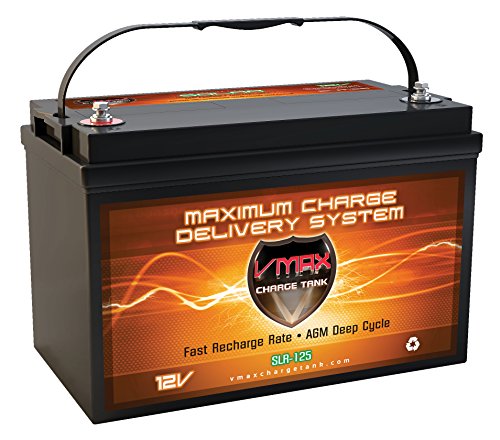
VMAXTANKS VMAXSLR125 Deep Cycle Battery
For applications requiring exceptional deep-cycle performance, the VMAXTANKS VMAXSLR125 gel battery delivers professional-grade reliability with maintenance-free operation.
20/06/2026 7:21 am
Performance highlights: This 125Ah gel battery excels in renewable energy systems, marine applications, and any scenario requiring consistent power over extended periods without regular charging.
✅ Pros:
- 8-10 year design life
- True deep cycle capability (up to 90% DOD)
- Maintenance-free operation
- Excellent temperature stability
- Military-grade AGM construction
❌ Cons:
- Lower starting current than AGM
- Requires compatible charging system
- Higher upfront investment
Key Features:
- 125Ah capacity at 20-hour rate
- Float service life: 8-10 years
- Cycle service life: 8-10 years
- Heavy duty calcium alloy grids
- Absorbed electrolyte technology
Best for: Solar power systems, marine deep cycle applications, RV house batteries, and backup power systems requiring long runtime.
Known limitations: Not suitable for high-current starting applications, and improper charging can permanently damage the gel electrolyte.
Making Your Final Decision 💡
There’s no universal “best” battery—it all depends on your needs. AGM batteries are the go-to for high performance and quick power, while Gel batteries are perfect for endurance and deep cycling.
For most car owners, AGM is the clear winner because:
- Superior starting power in all weather
- Faster charging for daily driving
- Better value for automotive applications
- Proven reliability in vehicles
Consider gel batteries only if:
- You need maximum deep-cycle capability
- Operating in extreme temperature environments
- Building off-grid power systems
- Budget allows for specialized charging equipment
Learn more about choosing the right battery for your specific vehicle in our detailed buyer’s guide.
Frequently Asked Questions ❓
Q: Can I use a regular charger on gel batteries? A: No, gel batteries require specialized chargers that limit voltage to prevent damaging the gel electrolyte. Standard chargers can permanently damage gel batteries.
Q: Which lasts longer in cars – AGM or gel? A: AGM batteries charge faster, while gel batteries offer longer life cycles under deep discharge conditions. In automotive starting applications, quality AGM batteries typically provide better longevity.
Q: Are AGM batteries worth the extra cost? A: For most drivers, yes. AGM batteries offer significant advantages over flooded batteries: maintenance-free operation, better performance, and longer life typically justify the higher upfront cost.
Q: Can gel batteries freeze? A: Gel batteries have better freeze resistance than flooded batteries, but extreme cold can still affect performance. Always size batteries appropriately for your climate.
Q: Which is better for hot climates? A: AGM batteries handle heat better than gel batteries, which can suffer permanent damage from high temperatures that cause electrolyte water loss.
For additional technical specifications and installation guides, visit the Battery Council International for industry standards and best practices.
Ready to upgrade your vehicle’s battery? Whether you choose AGM for everyday reliability or gel for specialized applications, investing in quality battery technology will serve you well for years to come. 🚗⚡
Related Posts
- Deep Cycle vs Regular Battery: Which One Powers Your Ride Best? 🔋
- Can a Car Battery Recharge Itself? The Complete Truth About Battery Charging
- Why Your Motorcycle Battery Dies After 2 Weeks: 5 Critical Problems to Check
- The Complete Guide to Memory Savers: Preventing Radio Code Lockouts During Battery Service
- Deep Cycle Battery vs AGM – Which Is Better for Your Needs?