
Essential Factors for Selecting Jack Stands That Protect Your Vehicle and Your Life
Choose the right jack stands for safe car maintenance. Expert guide covering weight capacity, build quality, adjustable vs fixed height options, and safety tips for DIY mechanics.
Working under your vehicle requires absolute confidence in your safety equipment. Jack stands form the critical barrier between successful DIY maintenance and potential disaster. This comprehensive guide examines the essential factors for selecting jack stands that ensure your safety while providing reliable support for your vehicle.
Vehicle Weight Capacity Requirements
Your vehicle’s curb weight determines the minimum capacity needed for safe jack stand operation. Check your owner’s manual for exact specifications, but always follow the double-capacity rule: if your car weighs 3,000 pounds, choose jack stands rated for at least 6,000 pounds total capacity.
Most passenger cars require 3-ton jack stands, while trucks and SUVs often need 6-ton capacity or higher. This safety margin accounts for uneven weight distribution and provides buffer against potential overloading during maintenance tasks.
Consider the weight distribution when lifting one end versus the entire vehicle. Front-end lifts typically support 60% of the vehicle’s weight due to engine placement, while rear-end lifts handle approximately 40%.
Ground Clearance and Height Compatibility
Vehicle ground clearance directly impacts jack stand selection. Sports cars and lowered vehicles typically have 4-6 inches of clearance, requiring low-profile jack stands that can fit beneath the chassis without damage.
SUVs and trucks offer 8-12 inches of clearance, accommodating standard-height jack stands with room for proper positioning. Understanding your vehicle’s ground clearance prevents costly undercarriage damage during placement.
Measure the distance from ground to your vehicle’s designated jack points. This measurement determines the minimum collapsed height needed for your jack stands to slide beneath the vehicle safely.
Chassis Type Considerations
Vehicle frame construction significantly affects jack stand placement options. Traditional body-on-frame vehicles feature steel frames that provide multiple secure mounting points along the frame rails.
Unibody construction presents more limited options for jack placement. These vehicles integrate the body and frame into a single unit, restricting safe lift points to manufacturer-designated locations typically found near suspension mounting points.
For unibody vehicles with limited access, consider all-in-one jack stands that combine lifting and supporting functions. These units require only one jack point, making them ideal for vehicles with restricted underbody access.
Proper placement techniques become even more critical with unibody vehicles. Understanding how to put a car on 4 jack stands safely ensures even weight distribution and prevents structural damage to your vehicle’s frame.
Build Quality and Material Construction
Professional-grade jack stands utilize high-strength steel or cast iron construction. These materials provide the structural integrity needed to support thousands of pounds safely over extended periods.
Aluminum jack stands offer weight savings but may lack the durability needed for heavy-duty applications. Reserve aluminum stands for lighter vehicles or occasional use rather than regular maintenance tasks.
Examine weld quality carefully before purchasing. Even, consistent welds indicate proper manufacturing standards, while irregular or incomplete welds suggest inferior construction that could fail under load.
Base design affects stability significantly. Wide, flat bases distribute weight more effectively and resist sinking into soft surfaces like asphalt during hot weather. Narrow bases concentrate weight and may create dangerous instability.
Look for stands with corrosion-resistant coatings that maintain structural integrity over time. Rust and corrosion weaken metal components, potentially leading to catastrophic failure during use.
Adjustable vs Fixed Height Options
Adjustable jack stands offer versatility for multiple vehicle types and varying maintenance tasks. Pin-style adjustment mechanisms provide secure height settings with positive locking engagement.
Ratcheting adjustment systems allow fine-tuning of height but may be more prone to slippage under extreme loads. Always engage safety pins or locks regardless of the primary adjustment mechanism.
Fixed-height jack stands eliminate adjustment-related failure points through solid, non-moving construction. These stands excel in single-vehicle applications where consistent height requirements make adjustability unnecessary.
Consider your maintenance needs when choosing between adjustable and fixed options. Multi-vehicle households typically benefit from adjustable stands, while single-vehicle owners may prefer the reliability of fixed-height units.
Safety Features and Certifications
Quality jack stands include safety certifications from recognized testing organizations. Look for ANSI or ASME certifications that verify load capacity and construction standards.
Self-locking mechanisms prevent accidental height adjustments during use. These features provide additional security beyond primary locking systems.
Safety chains or cables offer backup support in case of primary stand failure. While not common on all models, these features provide extra peace of mind during extended maintenance sessions.
Load distribution plates help spread weight across larger areas of the vehicle’s frame, reducing stress concentration at individual points.
Understanding Jack Stand Failure Prevention
Proper maintenance prevents most jack stand failures. Regular inspection for cracks, bent components, or worn adjustment mechanisms identifies potential problems before they become dangerous.
Learning how to remove jack stands from a car safely prevents damage during lowering procedures. Improper removal techniques can damage both the vehicle and the stands themselves.
Understanding what to do if your car falls off the jack stands provides crucial knowledge for emergency situations. While rare, stand failures do occur, and knowing proper response procedures could prevent injury.
Storage in dry locations prevents corrosion that weakens structural components. Clean stands after use and apply light oil to adjustment mechanisms to ensure smooth operation.
Top 5 Most Popular Jack Stands Among DIY Mechanics
Understanding which jack stands consistently earn customer trust helps narrow your selection. Based on performance, reliability, and user satisfaction, these five models dominate the market:
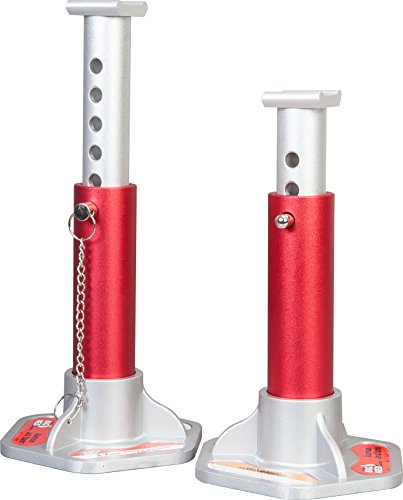
Torin Big Red T43004 Aluminum Jack Stands (3-Ton) lead in popularity due to their lightweight aluminum construction combined with 6,000-pound capacity. The red and silver finish provides excellent corrosion resistance while maintaining professional appearance.
20/06/2026 2:04 am
Torin Big Red AT42002R Steel Jack Stands (2-Ton) excel for smaller vehicles and budget-conscious mechanics. The 4,000-pound capacity handles most cars and sedans safely, while steel construction ensures long-term durability.

20/06/2026 2:04 am
Torin AT43005AB Steel Heavy Duty Jack Stands (3-Ton) feature double locking pins for enhanced security. The black finish and professional-grade construction make these stands popular among serious DIY mechanics who prioritize safety.

20/06/2026 2:04 am
Generic 3-Ton Adjustable Jack Stands offer exceptional height range from 11.6 to 19 inches, accommodating various vehicle types. The 6,600-pound capacity provides generous safety margins for most automotive applications.

20/06/2026 2:04 am
Torin Big Red T41202 Steel Jack Stands (12-Ton) serve heavy-duty applications with massive 24,000-pound capacity. The forged steel construction and welded frame design handle trucks, SUVs, and commercial vehicles safely.

20/06/2026 2:04 am
Torin Big Red’s market dominance reflects their successful balance of affordability and performance. These stands provide professional-grade reliability without premium pricing, making quality safety equipment accessible to all mechanics.
Professional-Grade Options Worth Considering
Several manufacturers produce jack stands that meet professional workshop standards. These units typically feature heavier construction, higher weight ratings, and enhanced safety features compared to basic consumer models.
Pin-style locking mechanisms generally provide more secure engagement than twist-lock systems. The positive engagement of pins eliminates gradual slippage that can occur with other locking methods.
Stands with wider bases offer superior stability, especially on uneven surfaces. This stability becomes crucial when working under vehicles for extended periods.
Quick-release mechanisms speed up height adjustments while maintaining safety. These features prove valuable when frequently adjusting stand height for different maintenance tasks.
Making the Final Selection
Choose jack stands that exceed your vehicle’s weight requirements by at least 100%. This safety margin accounts for uneven loading and provides protection against overloading.
Consider your workspace conditions when selecting base design. Concrete floors accommodate narrow bases, while softer surfaces require wider weight distribution.
Evaluate your skill level and maintenance frequency. Occasional users may prioritize simplicity and reliability, while frequent mechanics might benefit from adjustable, feature-rich options.
Budget considerations should never compromise safety. Quality jack stands represent a long-term investment in your safety and should be viewed as essential safety equipment rather than optional accessories.
Conclusion
Selecting appropriate jack stands requires careful consideration of your vehicle’s specifications, your maintenance needs, and safety requirements. Prioritize build quality, proper weight capacity, and reputable manufacturers over cost savings.
Remember that jack stands serve as your primary protection when working under vehicles. The consequences of failure far outweigh any initial cost savings from cheaper alternatives. Invest in quality stands that provide reliable service for years of safe vehicle maintenance.